So, let’s chat about something kinda cool in psychology: quasi experiments. You might be thinking, “What’s that?” Well, don’t worry, I got you.
Este blog ofrece contenido únicamente con fines informativos, educativos y de reflexión. La información publicada no constituye consejo médico, psicológico ni psiquiátrico, y no sustituye la evaluación, el diagnóstico, el tratamiento ni la orientación individual de un profesional debidamente acreditado. Si crees que puedes estar atravesando un problema psicológico o de salud, consulta cuanto antes con un profesional certificado antes de tomar cualquier decisión importante sobre tu bienestar. No te automediques ni inicies, suspendas o modifiques medicamentos, terapias o tratamientos por tu cuenta. Aunque intentamos que la información sea útil y precisa, no garantizamos que esté completa, actualizada o que sea adecuada. El uso de este contenido es bajo tu propia responsabilidad y su lectura no crea una relación profesional, clínica ni terapéutica con el autor o con este sitio web.
Imagine you’re trying to figure out if a new study technique helps students learn better. You can’t just wave a magic wand and assign everyone randomly to groups. Life is messy! So, quasi experiments swoop in like an unsung hero.
They let you explore real-world situations without the whole strict setup typical experiments have. You get insights without all the fuss. But what does that even look like in practice?
Stick around, and I’ll break it down for you. It’s gonna be a fun ride!
Understanding the 4 Quasi-Experimental Designs: Key Concepts and Applications in Research
Quasi-experimental designs are pretty interesting, especially if you’re into research but want something more flexible than true experiments. In a nutshell, quasi-experiments are like the cool cousin of traditional experiments. They let researchers explore causal relationships without needing to randomly assign participants to groups. This can be really useful in psychology where ethical concerns or practical issues make random assignment tricky.
- Non-equivalent control group design: This one’s popular when you can’t randomly assign participants. Imagine studying how a new therapy affects anxiety levels. You might have two groups: one that gets the therapy and another that doesn’t, but they’re already different in some ways. Researchers then measure anxiety before and after to see any changes.
- Interrupted time series design: Here, you look at a single group over time. Let’s say you want to see the impact of a new video game on players’ stress levels. Researchers might measure stress levels each week before and after the game’s release, tracking changes over several weeks or months.
- Regression discontinuity design: Think of this like a cut-off point for eligibility based on scores or traits. For instance, if students with scores above a certain threshold get extra tutoring, researchers can compare these students’ progress against those just below it, helping understand if the tutoring makes a difference.
- Crossover design: In this setup, participants receive multiple treatments at different times. Imagine athletes trying out two different training programs; they could switch halfway through to see which leads to better performance—pretty neat way to minimize differences between individuals!
Now let’s talk about why these designs are valuable! They allow for real-world applications where controlled experiments can’t always go—like schools or clinics where ethical constraints prevent random assignment.
Here’s something personal: I once read about this study observing kids in classrooms wearing different colored glasses as part of an intervention for attention issues. They couldn’t randomly assign kids since it would be unfair. Instead, they gathered existing groups wearing those glasses versus those who weren’t and checked their focus during tasks over several weeks! The findings showed some interesting shifts.
In essence, quasi-experimental designs have their quirks but can provide important insights into human behavior, even when full control isn’t possible! Just remember though; these methods don’t replace professional help or clinical assessments—they simply add layers to our understanding of psychological research and its application in real life situations!
Understanding the Three Types of Quasi-Experiments in Psychological Research
Quasi-experiments in psychology are pretty interesting. They’re like a mix between true experiments and observational studies. You can think of them as a way to study real-world situations where you can’t control everything, like in a lab. Let’s break down the three main types of quasi-experiments you might come across:
1. Nonequivalent Groups Design
This is where two or more groups are compared, but they aren’t randomly assigned. For instance, let’s say researchers want to see if students who attend private schools perform better than those in public schools. They could compare test scores from both groups without randomly placing students into their schools.
It’s kind of like trying to figure out if players who use different strategies in a game fare better without actually switching the players around to test the strategies directly. While you get some insights, keep in mind that differences in background or resources might skew the results.
2. Pretest-Posttest Design
In this design, researchers measure something before and after an intervention happens. Imagine someone wants to see if playing a specific game improves teamwork skills among a group of friends. They could give them a survey on teamwork skills before they play and then again afterward.
The key here is looking for changes over time, right? Nevertheless, other factors might influence those changes—like practicing teamwork outside of the game—so always take that into account.
3. Interrupted Time Series Design
Okay, this one can be really useful! Here, researchers examine how a particular event affects behavior over time by taking multiple measurements before and after that event occurs. Think about it like tracking your gaming performance after a major update: you could look at your scores from several weeks before and after you receive new features or tweaks.
If the scores change dramatically post-update, it suggests that the update had an impact—at least until other variables come into play!
So there you have it! Quasi-experiments offer valuable insights when controlled experiments aren’t feasible due to practical constraints. But remember, they can’t replace true experimental designs when it comes to establishing cause-and-effect relationships definitively.
All in all, while quasi-experiments enhance our understanding of behaviors in real-life settings, they still have limitations. So always approach findings with an open mind—especially since no study is perfect! If you’re curious about these methods or how they apply to psychological research further, don’t hesitate to reach out for more info!
Understanding the 4 Types of Experiments in Psychology: A Comprehensive Guide
When we talk about experiments in psychology, it’s like entering a chess game. Each move and strategy helps us understand how people think and behave. So, let’s break down the different types of experiments you might bump into, focusing on one that often gets overlooked: quasi-experiments.
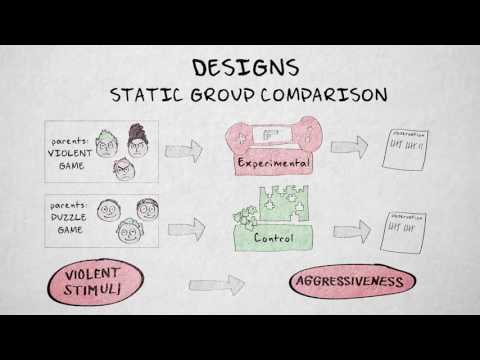
1. Quasi-Experiments: Okay, first off, what exactly is a quasi-experiment? It’s a form of research where you don’t randomly assign participants to groups. Instead, you look at groups already formed by other factors like age, gender, or socioeconomic status. This makes it super useful in real-world situations where random assignment isn’t possible. Say there’s a new video game that claims to improve memory; researchers can compare players vs. non-players without having to assign who gets to play.
2. Methodologies: The methods used in quasi-experiments can vary quite a bit. Researchers might use surveys, observations, or even existing data records to analyze their findings. For instance, let’s say researchers want to study the effects of social media on anxiety among teenagers. They could compare anxiety levels between teens who use social media and those who don’t—no random group assignments involved!
3. Applications: So where does this all lead us? Well, quasi-experiments are valuable in many fields! You can find them in education studies evaluating teaching methods or health research looking at the effects of different diets on community health outcomes. It’s practical!
Now picture this: Imagine two classrooms in a school—one using traditional teaching methods and the other using gamified learning (like points and rewards for activities). A researcher looks at test scores and student engagement without randomly assigning students across classes (which would be difficult with set classrooms). This type of study helps educators decide which method works better without messing up the school operations.
4. Limitations: Of course, not everything is sunshine and rainbows! Quasi-experiments have their drawbacks too. Since there’s no random assignment, it can be tricky to rule out other factors that might influence results—like motivation levels or external support systems at home.
I mean think about it: if students in one classroom have more involved parents than those in another classroom, that could impact the results big time! That means while these studies are insightful, you’ve got to take conclusions with a grain of salt.
In the end, quasi-experiments offer us a window into complex human behavior—without needing strict controls or random assignments every time. They help researchers gather valuable insights that are relevant to our everyday lives.
So remember: while they’re not perfect—and they certainly don’t replace professional help—they sure do add depth to understanding human experiences!
Quasi-experiments in psychology, wow, they’re pretty interesting! You know, it’s like they sit right in the middle between strict experiments and just plain observational studies. So, what’s up with that? Well, sometimes researchers can’t just randomly assign people to groups. Like, imagine trying to figure out the effects of a new teaching method on students. You can’t just shuffle kids around willy-nilly! Schools have their set classes, right? That’s where quasi-experiments come in.
Here’s the deal: instead of flipping a coin to decide which group gets what treatment, researchers look at existing groups and see how they stack up against each other. It’s not as neat and tidy as a full-on experiment, but it still offers some solid insights. Let’s say you’ve got two classrooms—one using that fancy new technique and one sticking with the old ways. By comparing their performances at the end of the semester, researchers can get a glimpse of what might be working.
And honestly? Sometimes this method feels more real-world to me! I mean, life isn’t all about controlled conditions and lab settings. Take my friend Sarah, for example. She struggled with anxiety during her college years; attending regular therapy sessions helped her in ways she never expected. But her experience wasn’t duplicated in a lab setting—it was raw and messy and oh-so-realistic. Quasi-experiments give us that kind of genuine glimpse into how things play out in everyday life.
It’s important to remember though: there are limitations! Without randomization, it’s tough to rule out all other variables that might influence results. Like if one class has all the overachievers while another has more laid-back kids—well that’s gonna skew your findings a bit! Researchers have to think critically about their interpretations and be careful about making sweeping conclusions.
So yeah, these quasi-experimental designs teach us quite a bit about human behavior while keeping things grounded in reality. They help bridge that gap between theory and practice—like understanding how certain interventions work outside of the lab walls where most life happens anyway. Isn’t that something worth pondering?