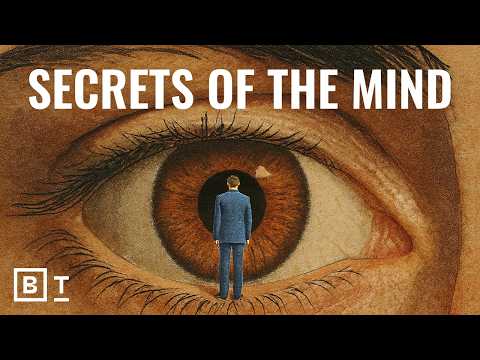
You ever sit back and think, «Am I really here?» I mean, like, what is this whole consciousness thing about anyway?
Este blog ofrece contenido únicamente con fines informativos, educativos y de reflexión. La información publicada no constituye consejo médico, psicológico ni psiquiátrico, y no sustituye la evaluación, el diagnóstico, el tratamiento ni la orientación individual de un profesional debidamente acreditado. Si crees que puedes estar atravesando un problema psicológico o de salud, consulta cuanto antes con un profesional certificado antes de tomar cualquier decisión importante sobre tu bienestar. No te automediques ni inicies, suspendas o modifiques medicamentos, terapias o tratamientos por tu cuenta. Aunque intentamos que la información sea útil y precisa, no garantizamos que esté completa, actualizada o que sea adecuada. El uso de este contenido es bajo tu propia responsabilidad y su lectura no crea una relación profesional, clínica ni terapéutica con el autor o con este sitio web.
It’s wild to ponder, right? Some folks say it’s just an illusion. An elaborate trick our brains are playing on us.
Picture this: you’re scrolling through your phone, lost in a sea of thoughts. But are those even *your* thoughts?
What if reality isn’t what it seems? Seriously. This idea can mess with your head!
Ready to take a little journey down this rabbit hole? Buckle up!
Exploring the Claim: Who Argues that Consciousness is an Illusion?
The idea that consciousness is an illusion has sparked a lot of debates in psychology and philosophy. So, who’s behind this claim? And what do they really mean? Well, let’s unpack it together.
First off, we have some well-known thinkers like Daniel Dennett and Thomas Metzinger. They argue that what we think of as «consciousness» isn’t this magical inner light or voice guiding us. Instead, it’s more of a trick our brains play. They suggest that consciousness is more about processing information and less about a central self that experiences everything—almost like playing a video game where you’re not the main character, but just controlling the character’s actions.
Some key points to consider include:
- Illusion of Self: According to Metzinger, our sense of «self» is essentially an illusion created by our brain. It constructs experiences and thoughts in real-time.
- Information Processing: Dennett emphasizes that what we perceive as conscious thought is just the brain’s way of organizing information efficiently; many processes happen below our awareness.
- Cognitive Neuroscience: Research in brain science shows how certain regions activate during decision-making without our conscious involvement. It’s like hitting buttons on an arcade machine without realizing you’re doing it!
Now, if you think about games like “The Sims,” your characters seem to have their own personalities and lives, but really, it’s all programmed behavior based on your input. That aspect resonates with the view of consciousness being a kind of simulation rather than a true reflection of something deeper.
Additionally, there are folks like Sam Harris who argue from a more experiential perspective. He suggests that if you look closely at your own mind through practices like meditation, you might realize that your thoughts come and go—often without any clear “you” controlling them. Imagine being in a movie theatre; you’re watching the movie unfold without having control over its plot twists or outcomes.
It’s also important to mention critiques against these ideas! Some people argue against reducing human experience to mere mechanics or algorithms. They believe there’s depth to consciousness that goes beyond mere information processing—you know?
So where does this leave us? While it’s fascinating to think about how consciousness could be an illusion crafted by our brains, it’s also crucial to recognize that feelings and experiences are very real for each individual. So questioning reality doesn’t mean dismissing genuine experiences—we’re just trying to understand them better.
Anyway, whether you’re into philosophy or just curious about how your mind works, these discussions remind us how complex human nature truly is! But remember: diving deep into consciousness doesn’t replace professional help when it’s needed—always reach out for support if you feel overwhelmed!
Elon Musk’s Views on Consciousness: Insights and Implications
Elon Musk has some pretty interesting views on consciousness. He often talks about it as if it’s this big puzzle, something we haven’t fully cracked yet. In a way, he thinks of consciousness not just as a human trait but as something we might be able to replicate in machines. Sounds ambitious, right? Let’s break it down a bit.
First off, Musk has mentioned quite a few times that he believes **consciousness could be an illusion**. Whoa! That’s a big statement. So, when he says that, he’s kind of suggesting that what we perceive as reality might not be all there is. Imagine playing a video game where everything looks super real—you’re interacting with characters and landscapes—but it’s all just code at the end of the day. This gets into some deep philosophical waters!
Also, Musk argues that if we could figure out how to create real AI consciousness, it might change everything. Think about it: the moment machines start to experience feelings or awareness like humans do, we’ll have to rethink how we interact with technology altogether.
Now here’s where it gets even more intriguing. He often references simulations—basically the idea that our reality could be one giant video game or simulation created by some advanced civilization. Let’s say you’re playing «The Sims» and you control little characters who think they have free will, but really they’re just living out routines you set for them. Could we be like those characters? It’s a wild thought!
To further complicate things, consider the implications of this perspective:
- Ethics in AI: If machines become conscious, what rights do they have? Do we treat them like people or tools?
- Reality perception: If our minds create illusions of reality, how can we trust our senses? Are your feelings just brain chemistry acting up?
- The nature of existence: What does it mean to “be”? Are humans more than biological robots programmed by evolution?
Just imagine discussing these questions over coffee with your friends; I bet things would get heated!
Musk’s ideas invite us to explore deeper meanings behind existence and challenge our understanding of consciousness itself. The thought that maybe **our awareness is just a complex set of responses** feels both unsettling and eye-opening.
All this doesn’t replace professional help if you’re grappling with similar thoughts or concerns about reality and your mental health—always reach out to someone who can guide you through those discussions in person.
So yeah, Musk’s views spark conversations about what it means to be conscious and aware in today’s increasingly tech-savvy world! You see? There’s so much more going on than meets the eye!
Exploring Albert Einstein’s Perspective: Did He Claim Reality is an Illusion?
So, let’s talk about Albert Einstein, you know him as the genius with crazy hair and wild theories. But did you know he had some pretty intriguing ideas about reality? Some folks out there suggest that he hinted at the idea that **reality could be an illusion**. It’s a big thought, right?
To get this straight, Einstein never outright said, “Hey, reality is an illusion!” But his theories on time and space do imply some mind-bending stuff about how we perceive the world.
First off, there’s the theory of relativity. You might’ve heard of it—basically it says that time and space are not fixed things. They can stretch and bend depending on speed and gravity. That shows us that reality isn’t just one thing; it changes based on perspective. So in a way, our experience of reality can be subjective.
Now think about **consciousness** for a moment. This is where things get even more interesting. If you believe that your awareness shapes how you see the world—and scientists have debated this—you start to wonder if what we call “real” is really just a reflection of our own minds.
Here are some key points to consider:
- Perception vs. Reality: We all see things differently based on experiences, feelings, and beliefs.
- Time Dilation: Remember when you played video games for hours and felt like time flew by? That’s similar to Einstein’s idea—time can feel different depending on what you’re doing.
- Quantum Mechanics: This area suggests particles exist in multiple states until observed; it’s like they’re waiting for you to pay attention before they ‘decide’ what they are!
Let’s say I told you I had a pet unicorn living in my backyard—it’d sound pretty ridiculous! But if I showed you a really convincing picture or video of it doing cool unicorn things, your mind might start spinning with possibilities. That shows how our beliefs can alter our perception of reality.
On another note, there’s an emotional aspect too. Imagine being stuck in a sad place mentally because of something awful that happened in your life—a breakup or losing a job. Those feelings create your own version of reality that’s heavy and hard to escape from.
And here’s where the connection deepens: consciousness can feel like an illusion too! Think about daydreaming or zoning out during class, right? You might be physically there but emotionally somewhere else entirely—so which “you” is real?
All this ties back into how Einstein views our existence through a scientific lens while also flirting with philosophical ideas about awareness and perception. While he didn’t come out swinging with claims that everything is an illusion, his explorations certainly challenge us to rethink what we consider as “real.”
This kind of exploration doesn’t replace professional help or guidance if you’re grappling with tough thoughts or feelings—just keep that in mind! Engaging with these concepts can expand your understanding but should be balanced gently with self-care.
So next time you’re staring up at the stars or pondering life’s great mysteries over coffee, remember: sometimes reality may just be what we make of it! Wow! Isn’t that thought exciting?
You know, the whole idea that consciousness might be an illusion can really shake things up. I mean, take a moment to think about it: are we really aware of what’s happening around us, or is it all just a grand show we’re putting on? Picture this: you’re at a concert, totally lost in the music. Your heart’s racing, your body’s swaying, and for that one moment, everything feels real and alive. But then you snap back to reality, and you realize it was just sound waves vibrating through the air. Crazy, right?
So let’s talk about this idea of consciousness being an illusion. There’s a lot of philosophical chatter out there, like how our brains process information way faster than we can consciously think about it. Basically, your brain takes in all these signals—sights, sounds, smells—and by the time you notice them consciously? Well, they’ve already been filtered and interpreted.
It reminds me of my friend Sarah from college. She once had this intense experience while meditating; she felt like she was floating outside her body and seeing everything from above. When she described it to me later on over coffee, I could see how real it felt to her in that moment. But was Sarah really “seeing” anything? Or was her brain just playing tricks as it navigated through thought patterns? It’s wild to think that sometimes what we perceive as truth might be nothing more than our mind’s clever sleight of hand.
And here’s where things get even twistier: if consciousness is an illusion, does that mean life itself is some sort of massive performance? Imagine we’re all actors on a stage, playing our parts without realizing there’s no grand script written anywhere. The emotions we feel—the joy when hugging a friend or the sadness during a farewell—are undeniably real in those moments yet could also be nothing more than chemical reactions in our brains.
But don’t get too down about it! I mean yeah, if consciousness were an illusion, that sounds kind of bleak at first glance. But maybe it’s also liberating! If our perceptions are just projections from our minds instead of concrete truths about reality—maybe there’s room for creativity and imagination? Maybe that’s where art comes from! Embracing this uncertainty could allow us to live life with more curiosity and wonder.
All in all—and I’m just spitballing here—it seems like questioning consciousness doesn’t have to lead us into despair but rather spark conversations about who we are and how we experience life. Sometimes getting lost in those big questions can actually help us find meaning in the little moments that take our breath away—even if they are just illusions after all! So hey—you with me on this mind-bending ride?