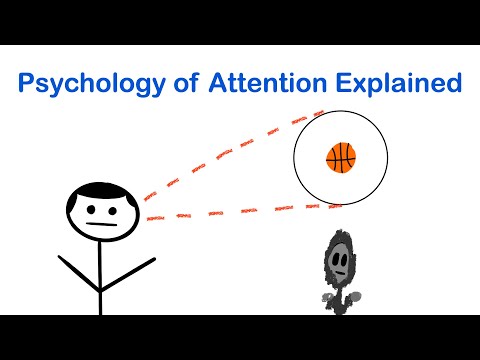
Hey you! So, let’s talk about something super interesting today—selective attention.
Este blog ofrece contenido únicamente con fines informativos, educativos y de reflexión. La información publicada no constituye consejo médico, psicológico ni psiquiátrico, y no sustituye la evaluación, el diagnóstico, el tratamiento ni la orientación individual de un profesional debidamente acreditado. Si crees que puedes estar atravesando un problema psicológico o de salud, consulta cuanto antes con un profesional certificado antes de tomar cualquier decisión importante sobre tu bienestar. No te automediques ni inicies, suspendas o modifiques medicamentos, terapias o tratamientos por tu cuenta. Aunque intentamos que la información sea útil y precisa, no garantizamos que esté completa, actualizada o que sea adecuada. El uso de este contenido es bajo tu propia responsabilidad y su lectura no crea una relación profesional, clínica ni terapéutica con el autor o con este sitio web.
You know those moments when you’re in a crowded coffee shop, and somehow, you can zoom in on your friend’s voice while tuning out all the chaos around you? Yeah, that’s selective attention at work. Crazy, right?
It’s like your brain has this cool filter. It helps you focus on what really matters. But how does it even work?
Let’s figure this out together! It’s such a neat little trick our minds play. Grab your coffee (or whatever fuel you need), and let’s get into it!
Understanding the Difference Between Selective Attention and Selective Perception in Psychology
Hey you! Let’s chat about something that plays a huge role in how we see the world: selective attention and selective perception. They sound super similar, but they’re actually quite different. So, grab a seat and let’s break this down!
Selective Attention is all about what grabs your focus. Imagine you’re in a crowded café, trying to hear your friend talk over the noise of steaming coffee and clinking cups. You hone in on their voice while filtering out everything else. That’s selective attention at work! It helps us concentrate on important stuff while ignoring distractions.
- Key Point: It involves choosing what sensory information to focus on.
- Example: Think of playing a video game where you have to dodge obstacles while keeping an eye on your score. Your attention zooms in on the game elements crucial for winning!
Now, onto Selective Perception. This is more about how you interpret what you actually pay attention to. You know how sometimes two people can watch the same movie but walk away feeling totally different? That’s because they have their own perspectives and biases influencing their perceptions.
- Key Point: It refers to how we interpret what we’ve focused our attention on.
- Example: After playing that intense racing game, one friend might feel exhilarated by the speed, while another might just feel stressed about crashing. Both saw the same race but interpreted it differently.
So here’s where it gets interesting: Selective attention is like the spotlight on a stage, while selective perception is all about how each audience member reacts to what they see under that light. You can focus clearly on something, but that doesn’t mean you’ll perceive it the same way as someone else.
Let me share a little story with you. I remember once going to an art exhibit with my buddy who loves abstract art. I was focused—thanks to selective attention—on just trying to understand one piece when he started raving about its emotional impact. I thought it looked like total chaos! But he perceived depth and meaning that just flew over my head!
This just goes to show how much our personal experiences shape our interpretations of things.
In summary:
– Selective Attention helps us filter information based on importance.
– Selective Perception shapes our understanding of what we choose to focus on.
Just remember: if ever these concepts create problems in your life or lead you confused, reaching out for professional help isn’t a bad idea at all! It can truly make a difference in sorting through our thoughts and feelings.
So, next time you’re concentrating or having different feelings from someone else about an experience—think about these concepts! They’re pretty cool tools our brains use every day!
Understanding Selective Attention: Focus and Perception in Psychology with Real-Life Examples
Well, let’s chat about **selective attention**. It’s a pretty cool concept in psychology that helps us understand how we focus on certain things while tuning out others. Think of it like being at a crowded party. You can hear your friend’s voice over the music, but you might miss what someone else near you is saying. That’s selective attention in action!
Now, here’s what happens. Our brains are bombarded with tons of information every second. If we tried to focus on everything all at once, we’d feel overwhelmed, right? So instead, our brain zooms in on what it finds most relevant or interesting.
- What is Selective Attention? Basically, it’s the process that allows you to concentrate on specific stimuli while ignoring others.
- The Cocktail Party Effect: This is that nifty ability to focus on one conversation in a noisy room—like picking out your best buddy’s laugh from the chatter around you.
- Visual Selective Attention: Have you ever played «Where’s Waldo?» The game is all about spotting Waldo among a sea of other characters! That takes some serious visual selective attention.
- The Stroop Effect: Ever tried reading the word “red” when it’s printed in blue ink? It’s tricky because your mind fights between what you read and what you see!
Think about when you’re studying for exams, and your phone buzzes. You may ignore a loud music video playing in the background but feel compelled to check your notifications. That’s selective attention directing your focus to what’s more pressing for you.
Let me tell you a quick story. I once sat in a café with a friend catching up over coffee—lots of chatter around us! Suddenly, I heard someone mention my favorite band across the room. I couldn’t even tell you what my friend said after that because I was totally tuned into the other conversation! This is exactly how selective attention works: it’s not just about hearing; it’s about prioritizing our perception.
But remember this: everyone has different levels of attentional capacity—some folks can juggle distractions better than others. So if you’re struggling to focus sometimes? No biggie! It could just be how your brain filters information.
In real life, there are those moments where selective attention really shines through—like when you’re driving and keeping an eye out for pedestrians, while also watching traffic signals and avoiding potholes everywhere! Your brain prioritizes those critical signals so you can react without thinking too hard.
All in all, selective attention plays a huge role in daily experiences—shaping how we see and interact with the world around us. If you’re keen to learn more or feel like it’s affecting your daily life significantly? Maybe consider chatting with someone who specializes in this kind of stuff! Remember that while understanding these concepts can be enlightening, it’s always good to reach out for help if needed.
Understanding Selective Attention: Focus and Perception in Psychological Research (PDF)
Selective attention is one of those fascinating quirks of the mind that shapes how we experience our world. Basically, it’s about what you choose to focus on in a sea of information. So, whether it’s the hum of chatter in a busy café or the thumping bass of your favorite song, your brain acts like a spotlight, illuminating certain aspects while dimming others.
What is Selective Attention? It’s when you concentrate on one specific thing while ignoring distractions around you. This could be anything from listening to your friend talking at a party to reading a book in a loud room. It helps us process information effectively and makes sense of everything swirling around us.
This concept isn’t just theoretical; it’s been studied extensively in psychology because it reveals so much about perception and cognition. Imagine playing a game like «Where’s Waldo?” You’re scanning through crowded illustrations, focusing intensely on finding Waldo while ignoring all kinds of other characters. Your selective attention kicks in, helping you hone in on just that one striped shirt.
Here are some key points about selective attention:
- Types: There are two main types—focused attention and divided attention. Focused attention means concentrating entirely on one task, while divided attention refers to managing multiple tasks at once.
- Cocktail Party Effect: Ever noticed how you can hear your name mentioned across the room despite all the noise? That’s an example of selective attention—it lets you pick out important info even amid chaos.
- Limitations: While it’s super helpful, selective attention also has its downsides. You might miss crucial cues or make mistakes if you’re too focused on one thing. Think about driving while texting—your focus could lead to dangerous situations!
- Applications: Understanding selective attention can aid everything from improving study habits to enhancing safety protocols in workplaces.
The brain doesn’t always get it right, though! Seriously, have you ever been so absorbed in something that when someone asks if you saw something nearby—you’re completely clueless? That’s because while we can’t focus on everything at once, we often think we can handle more than we actually can.
Researchers have conducted numerous experiments over the years to delve deeper into this topic. For instance, they might show participants two overlapping images where only certain details are visible when focused upon—a brilliant way to study what attracts our visual attention and how quickly we can shift our focus.
It boils down to this: selective attention plays a crucial role in our daily lives as much as it does in psychological research. It helps shape experiences by filtering out irrelevant information and directing our cognitive resources where they’re most needed.
In short, understanding how selective attention works can help us navigate not just our daily tasks but also understand some psychological principles that govern perception itself. And remember: if you find yourself struggling with focus or feeling overwhelmed by distractions regularly, it’s always good to reach out for professional support—it really helps!
You know how sometimes you’re in a crowded room, and you can still eavesdrop on someone’s conversation across the table? That’s selective attention at work! It’s like your brain has this superpower to filter out the chaos and zoom in on what’s important at that moment.
I remember one time I was at a party, and everyone was having a blast—music blaring, people laughing. But there was this one friend of mine who seemed a little down. Despite all the noise and excitement around us, somehow I noticed her sitting quietly in the corner. I just felt compelled to go over and check in. It’s wild how our minds can latch onto specific details when something feels off, right?
Selective attention is basically your brain’s way of prioritizing information. You pick up on certain stimuli while ignoring others. This is super helpful—it keeps you from feeling overwhelmed by everything all at once. But it can be a double-edged sword too! Like, when you’re cramming for an exam or trying to finish a project with distractions everywhere, you might miss some key points or forget things easily because you’re focusing on so many unrelated thoughts.
Research suggests that we can only truly focus on about four things at once before our brain starts to scramble things up like a bad playlist. This makes sense when you think about how hard it is to listen to music, text your friend, and pay attention to your boss all at the same time!
So, what does this mean for you? Well, recognizing how selective attention works can help improve your focus when it really counts. Try limiting distractions during important tasks—like turning off notifications or finding a quiet space—and watch how much more efficient you become.
In the end, it’s kind of amazing how our brains filter through thousands of bits of information every day without us even realizing it. Just keep in mind that being aware of these processes can really help us navigate life better and connect more deeply with those around us!