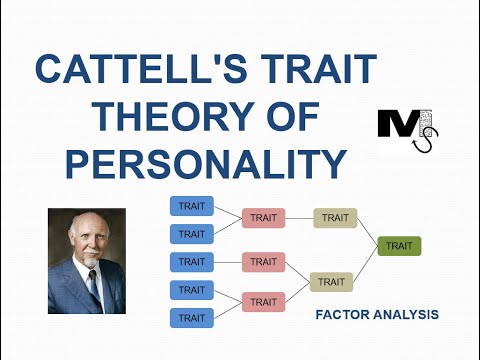
So, let’s talk about Cattell’s 16PF for a sec. I mean, you ever wonder why people act the way they do? It’s one of those questions that always gets me thinking.
Este blog ofrece contenido únicamente con fines informativos, educativos y de reflexión. La información publicada no constituye consejo médico, psicológico ni psiquiátrico, y no sustituye la evaluación, el diagnóstico, el tratamiento ni la orientación individual de un profesional debidamente acreditado. Si crees que puedes estar atravesando un problema psicológico o de salud, consulta cuanto antes con un profesional certificado antes de tomar cualquier decisión importante sobre tu bienestar. No te automediques ni inicies, suspendas o modifiques medicamentos, terapias o tratamientos por tu cuenta. Aunque intentamos que la información sea útil y precisa, no garantizamos que esté completa, actualizada o que sea adecuada. El uso de este contenido es bajo tu propia responsabilidad y su lectura no crea una relación profesional, clínica ni terapéutica con el autor o con este sitio web.
You know how some folks seem super chill, while others are all over the place? That’s basically personality traits at work. But the cool thing is, there’s this model—Cattell’s 16PF—that digs deep into what makes us tick.
It breaks down our personalities into 16 different traits. Wild, right? These traits can help you understand not just yourself but also your friends and family (hello relationship goals!).
So, if you’re curious about what makes you YOU or want to better get your head around other people’s quirks, stick around! I promise it’ll be interesting.
Downloadable PDF of Raymond Cattell’s Trait Theory of Personality: Key Concepts and Applications
Alright, let’s chat about Raymond Cattell’s Trait Theory of Personality. You might have heard of his work in psychology, especially his 16 Personality Factors (16PF) model. It’s essential for understanding how we all tick differently!
Cattell aimed to identify the main traits that define human personality. He believed that by analyzing these traits, we could better understand behaviors and predict how individuals might respond in various situations. So, it’s like having a personality cheat sheet!
- Personality Traits: Cattell categorized personality into 16 core factors. These are not just random; they were derived from extensive research and statistical methods like factor analysis.
- Factor Analysis: This is a fancy way of saying that Cattell looked at tons of data to find patterns in how people behaved. Just picture sorting through a messy closet and organizing everything by type!
- The 16PF Questionnaire: This tool helps measure the traits identified by Cattell. When you take this test, it can provide insights into your personality style and preferences.
- Application: Understanding your traits can improve aspects of life—be it relationships or career choices. For example, if you know you’re high on warmth but low on dominance, you might thrive in collaborator roles rather than leadership.
A quick story—imagine two friends playing their favorite video game together. One is super strategic; they think carefully before making every move. The other? They just dive right in without a second thought! The first friend likely scores higher on traits like planning and caution, while the second shines on spontaneity. See how different personalities lead to unique styles even in gaming?
Cattell’s theory highlights how diverse we are as humans. By recognizing these differences through his model, we can learn more about ourselves and each other.
Just a little reminder here: while exploring your personality with tools like the 16PF is enlightening, it’s always wise to consult with a mental health professional for deeper insights or guidance tailored specifically for you.
This stuff can get pretty detailed if you want it to be! But that’s the gist of Cattell’s Trait Theory—you see where he was coming from when he laid this out? It’s not just theory; it’s practical and applicable to day-to-day life!
Cattell’s 16 Personality Factors Test PDF: Comprehensive Guide and Download
Cattell’s 16 Personality Factors Test, often called the 16PF, is a well-known tool used to assess personality traits. This test was developed by psychologist Raymond Cattell in the mid-20th century and aims to give insights into how individuals think, feel, and behave.
So, what exactly does the 16PF measure? Well, it looks at 16 core personality traits that are grouped into five broader dimensions. Here’s a quick look at some of these traits:
- Warmth: How friendly or outgoing you are.
- Emotional Stability: Your ability to handle stress and emotional challenges.
- Dominance: How assertive or aggressive you tend to be with others.
- Sensitivity: Your level of empathy and understanding towards others.
- Intellectance: Your desire for knowledge and intellectual engagement.
When you take the test, you’ll typically answer a series of questions or statements about yourself. These responses help paint a picture of your personality profile. Pretty neat, huh?
To give you an example: if you’re playing a role-playing game where you need to choose between being a healer or a warrior, your choice might reflect your scores on traits like warmth and emotional stability. If you’re drawn to helping others with healing spells rather than charging into battle, that could indicate higher warmth and sensitivity.
The results from the 16PF can be useful in various situations—like career counseling or personal development—but they’re not meant to box you in! They give a snapshot of your personality at a certain time but don’t define who you are completely.
If you’re interested in getting your hands on the Cattell’s 16 Personality Factors Test PDF, it’s usually available through psychological resources online. Just remember that taking this test should never replace professional help if you’re struggling with serious issues.
In short, Cattell’s approach provides meaningful insight into how we relate to each other and the world around us. It’s like holding up a mirror to see not just who we are but also how we can grow. So whether you’re curious about yourself or looking for ways to understand friends better, this test offers some cool perspectives!
Understanding Raymond Cattell’s Trait Theory of Personality: A Comprehensive PPT Guide
Raymond Cattell was a real pioneer in the world of personality psychology. He spent years studying and analyzing how our traits shape who we are, leading to his development of the **16 Personality Factor Questionnaire**, also known as the 16PF. So, what’s the deal with Cattell’s Trait Theory? Let’s break it down.
Personality Traits
Cattell believed that personality could be understood through different traits that people can have. He focused on 16 primary traits that represent human behavior on a spectrum. Think of these traits like colors on a palette—each one contributes to the overall picture of who you are.
The 16 Traits
Here are some of the key traits Cattell identified:
- Warmth: How friendly and approachable someone is.
- Reasoning: A measure of intellect and problem-solving ability.
- Emotional Stability: Your ability to handle stress and remain calm.
- Dominance: How assertive or controlling you tend to be in social situations.
- Liveliness: The energy and enthusiasm you bring to activities.
- Rule-Consciousness: Your tendency to follow rules and regulations.
- Sensitivity: Being aware of others’ feelings and being empathetic.
- Vigilance: How suspicious or trusting you are in relationships.
- Aberration: Your tendency toward unconventional or odd behavior.
- Boldness: Willingness to take risks or face challenges head-on.
- Sociability: Enjoyment from being with others versus preference for solitude.
- Cautiousness: Judiciousness in decision-making—taking time to consider things carefully.
- Maturity: A blend of emotional strength, judgment, and wisdom.
- Anxiety: The degree of nervousness or worry you typically experience.
- Tension: Your capacity for relaxation—how easily you let go of stressors.
- Permanence vs. Changeability (the final trait):You might lean towards consistency in your habits or prefer variety and change!
The 16PF Questionnaire
To measure these traits, Cattell created a questionnaire where people answer questions about their behaviors and preferences. It’s kind of like playing an RPG (role-playing game) where your character’s skills determine how they interact with the world! Instead of fighting dragons, though, you’re exploring your own personality.
The Big Five Comparison
You might have heard about the Big Five personality traits too—Openness, Conscientiousness, Extraversion, Agreeableness, Neuroticism—right? Well, Cattell’s work was one step on the path that helped psychologists identify these broader categories too! So think of his model as adding more detail before we met those “big” five buddies.
In essence, Cattell’s approach is all about understanding us as complex individuals made up of many little pieces called traits.
Anecdote Time!
So here’s something interesting: I remember when my friend took the 16PF just out of curiosity. She thought she was super introverted because she loved binge-watching shows alone. But guess what? The results showed she had high sociability! Turns out she just needed more downtime after social events. Who knew a quiz could shine light on blind spots like that?
Taking It All In
Cattell’s theory doesn’t replace professional help if you’re looking at deep-seated issues but gives us a useful framework for understanding ourselves better! By figuring out where we fall on this spectrum of traits, we can learn more about our behaviors and perhaps even make some positive changes.
So there you have it—Cattell’s Trait Theory in a nutshell! It’s all about recognizing those tiny nuances that make up our personalities. Cool stuff right?
Alright, let’s chat about something that’s pretty cool in the world of psychology—Cattell’s 16 Personality Factors, or 16PF for short. It might sound like a mouthful, but stick with me here because it’s all about understanding who we are at our core.
So, imagine you meet someone at a party, and they have this magnetic personality. They’re funny, easy-going, and just seem to get along with everyone. Meanwhile, there’s another person in the corner who’s more reserved and likes to observe rather than mingle. Both of them are super interesting in their own ways, right? Cattell was trying to figure out just why we act the way we do.
He came up with these 16 factors that cover a whole range of traits—things like warmth, emotional stability, or even how open someone is to new experiences. It’s almost like he looked at personality as a giant puzzle with different pieces that fit together differently for each person. You with me?
Now, I remember this one time during college when I took a personality test based on the 16PF model for fun. I was super curious about how I’d come off to others. When the results came back, I was surprised to see «perfectionist» as one of my top traits. At first, I thought, “Whoa! That sounds intense.” But then it made sense when I thought about how I always had to tidy up before friends came over or how I’d redo assignments until they met my standards.
But here’s the thing: while one trait might stand out for you—like being outgoing—it doesn’t mean you can’t also be serious or shy sometimes. Cattell believed our personalities were more nuanced; they’re not just black and white but full of shades and colors.
What really stands out in his work is how he approached personality scientifically—not just throwing around labels but actually measuring and categorizing traits using factors so we could understand them better. It kinda gives you this structured way to think about why people clash or connect so easily.
And yeah, while some folks might roll their eyes and say personality tests are just fun quizzes you do on your phone (I mean, I’ve definitely done those), Cattell’s work has real depth behind it. It helps in fields like counseling or even team-building exercises because understanding each other can lead to better communication.
So whether you’re the life of the party or prefer cozy nights at home with a book (no judgment here), Cattell’s 16PF reminds us that every single one of us has unique traits that shape who we are and how we interact with each other—and that’s something worth celebrating!