Okay, so let’s talk triangles, shall we? You know, those three-sided figures that pop up everywhere. Seriously, they’re not just for math class.
Este blog ofrece contenido únicamente con fines informativos, educativos y de reflexión. La información publicada no constituye consejo médico, psicológico ni psiquiátrico, y no sustituye la evaluación, el diagnóstico, el tratamiento ni la orientación individual de un profesional debidamente acreditado. Si crees que puedes estar atravesando un problema psicológico o de salud, consulta cuanto antes con un profesional certificado antes de tomar cualquier decisión importante sobre tu bienestar. No te automediques ni inicies, suspendas o modifiques medicamentos, terapias o tratamientos por tu cuenta. Aunque intentamos que la información sea útil y precisa, no garantizamos que esté completa, actualizada o que sea adecuada. El uso de este contenido es bajo tu propia responsabilidad y su lectura no crea una relación profesional, clínica ni terapéutica con el autor o con este sitio web.
But here’s the kicker: not all triangles are created equal. Some are special—and that’s where ASA congruent triangles strut their stuff!
Picture this: you’ve got two triangles that look exactly the same in terms of angles and side lengths. It’s like they’re twins! That’s what we call ASA—Angle-Side-Angle congruence.
Trust me, it sounds way more complicated than it is. It’s really just a fancy way to check if two triangles can be considered identical in shape and size. You with me?
Comprehensive Guide to ASA Congruent Triangles in Geometry: Key Concepts and Explanations
I’m here to chat about something a bit different, but let’s take a quick trip into geometry. Specifically, we’re talking about **ASA congruent triangles**. Sounds geeky? Well, bear with me. It’s actually pretty cool once you get the hang of it.
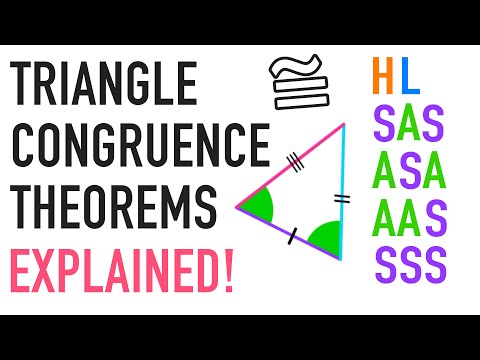
So, first things first: what does ASA even mean? It stands for **Angle-Side-Angle**. Basically, if you have two triangles and know that they have two angles and the side between them equal in both triangles, then those triangles are considered congruent. Cool, right?
- Angles: You need to know two angles in each triangle.
- Side: The side that’s between those two angles has to be the same length.
Let me give you an example! Say you’ve got triangle ABC and triangle DEF. If angle A equals angle D, angle B equals angle E, and side AB equals side DE, then triangles ABC and DEF are congruent! They’ll look exactly the same even if they’re flipped or rotated.
Now, why does this matter? Well, understanding how these congruences work helps with proofs in geometry — which can sometimes feel like trying to solve a riddle without all the clues! Knowing that ASA can tell you that triangles are congruent gives you a powerful tool in your math toolbox.
Imagine you’re playing a puzzle game where you need to match pieces based on shapes and sizes. If you spot two pieces that share exactly those specific angles and sides as described above, boom! You’ve matched them perfectly.
It’s also great for real-life applications. If you’re working on design or construction projects — like building furniture or laying out a garden — knowing how to create congruent triangles ensures everything fits together just right.
In case you’re wondering about the technical stuff: when proving triangles are congruent using ASA method., mathematicians use postulate rules. That’s just a fancy way of saying they have established rules based on definitions and properties. But don’t sweat too much over that; just remember it’s about matching up those angles and sides!
And hey, keep in mind this explanation is all about learning together! If you’ve got challenges with geometry (or anything else!), don’t hesitate to reach out for help—whether it’s from teachers or tutors.
So there it is! ASA congruence is essential for various reasons within geometry—making your math life easier down the road while also being super helpful outside of classes too. Just remember: if you’ve got your angles and your sides lined up right—it’s like winning at geometric Tetris!
Mastering ASA Congruent Triangles: A Clear Guide to Geometry Questions and Concepts
Hey, let’s talk about **ASA Congruent Triangles** in geometry. This topic can sound a bit intimidating at first, but once you break it down, it’s really not that complex! So, what does ASA stand for? It means **Angle-Side-Angle**, and it’s a way to prove that two triangles are congruent, or in simpler terms – they’re basically the same shape and size.
Understanding ASA
If you have two triangles and you know:
- One angle from the first triangle is equal to one angle from the second triangle.
- The side between these two angles in both triangles is of equal length.
- And then another angle from the first triangle matches with an angle from the second triangle.
Then you can say that these triangles are congruent by the ASA postulate. Cool, right? It’s like having two identical pizza slices with toppings arranged exactly the same way!
Why Does It Matter?
You might be wondering, “What’s the big deal?” Well, figuring out triangle congruence helps in various real-life situations. Think about architects designing buildings or engineers creating bridges. They need to know that their measurements are accurate and symmetrical.
A Quick Example
Let’s say you’re playing a game where you have to match shapes. You pick up a triangle card that reads: «Angle A = 40 degrees,» «Angle B = 60 degrees,» and «Side AB = 10 cm.» If your opponent has a card with «Angle D = 40 degrees,» «Angle E = 60 degrees,» and «Side DE = 10 cm,» congratulations! You can confidently claim those triangles are congruent using ASA!
Visualizing ASA
It helps to visualize situations like this as if you’re assembling puzzle pieces. When two sides and angles fit perfectly, they will create similar shapes every time—like magic!
But remember: this method works specifically when you’re looking at two angles with the side between them (the included side). If you mix up that order or compare sides not connected by those specific angles—it won’t work.
Practice Makes Perfect
A good way to master these concepts is through practice problems. Grab some worksheets or apps that focus on geometric shapes and start working through some examples yourself. Feel free to make mistakes; they’re just part of learning!
So there it is—a neat, little breakdown of ASA congruent triangles! Sure, geometry may seem daunting now and again but with time, patience, and practice, you’ll totally get it. And always remember: this info is helpful but doesn’t replace professional help if you’re struggling beyond just fingers crossed trying out more examples!
Now go on out there (or stay in!)—and tackle those triangles like a pro!
Understanding ASA Geometry: Definition, Properties, and Applications
Understanding ASA Geometry is all about triangles, people! You know those three-sided shapes that are everywhere? Well, 💡 there’s a special case in triangle geometry called the ASA criterion. It stands for Angle-Side-Angle. The basic idea? If you have two angles and the side that’s between them, you can determine that the triangles are congruent.
So, let’s break it down a bit:
- Definition: ASA states that if two angles and the side between them in one triangle are exactly equal to two angles and the side between them in another triangle, then those triangles are congruent.
- Properties: When triangles are congruent, they have identical sizes and shapes. This means corresponding sides and angles will match up perfectly. Pretty cool, right?
- Applications: ASA is super helpful in various fields like architecture or engineering where precise measurements matter. Think about building bridges or homes. They rely on these principles to ensure safety and stability.
Here’s a quick example to make it more relatable: Imagine you’re playing a game of “Tetris.” You have different shapes falling down, and you need to fit them together perfectly. If you know two angles of your shape and the side connecting them matches with another shape falling down (let’s say it’s shaped like an «L»), you’d be able to tell if they will fit together without any gaps.
Oh! And just so you know—this doesn’t replace professional help if you’re struggling with geometry concepts or anything else mental health-related.
In practical terms, when working with triangles using ASA, you might calculate things like area or use trigonometry to find missing sides. So it’s not just about proving congruence; it actually can lead to solving real problems.
All in all, understanding ASA helps us recognize how powerful geometry can be in our everyday life! Pretty neat for a bunch of lines and angles, huh?
You know how sometimes you stumble upon something in math that just clicks? Well, for me, it was congruent triangles. Specifically, the ASA (Angle-Side-Angle) theorem. It’s like a little secret handshake among triangles. If two angles and the side between them are the same in two triangles, they’re congruent—like best buddies who just can’t be separated.
I remember sitting in a math class, staring at these shapes on the board while my mind wandered off to what I’d have for lunch. Then, suddenly, my teacher drew two triangles that looked almost identical except for a tiny shift here and there. He marked the angles and side with those little tick marks that reminded me of scoring a point in basketball. That’s when it hit me: these two shapes were actually the same size and shape! It was like seeing twins from different schools—you might not notice at first glance.
So, why is it such a big deal? Well, congruence helps us prove things about triangles without needing to measure everything out with a protractor or ruler every time. Just by knowing a couple angles and one side length fit right together, we can confirm they’re twins—sorry if I keep using that analogy! It’s kind of freeing when you realize you don’t need every detail spelled out to understand what’s happening.
The ASA theorem is super handy too because it lets us solve problems faster. If we can establish that some triangles are congruent based on angles and one side being equal, we can figure out other sides or angles without going down a rabbit hole of calculations. Isn’t that neat?
There’s something comforting about geometry—a sense of order in all those lines and shapes. So next time you find yourself tangled up in triangle talk, remember: if you’ve got two pairs of angles and their included side snugly matching up between them, you’ve got congruence on your hands! And hey, maybe even grab some lunch afterward—because math will always be waiting for you when you’re ready to come back!