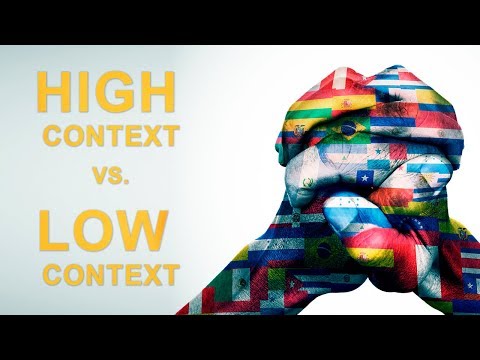
You know, cultures are kinda like ice cream flavors. Some are rich and packed with chunks, while others are light and simple. When we talk about high context and low context cultures, it’s a lot like that.
Este blog ofrece contenido únicamente con fines informativos, educativos y de reflexión. La información publicada no constituye consejo médico, psicológico ni psiquiátrico, y no sustituye la evaluación, el diagnóstico, el tratamiento ni la orientación individual de un profesional debidamente acreditado. Si crees que puedes estar atravesando un problema psicológico o de salud, consulta cuanto antes con un profesional certificado antes de tomar cualquier decisión importante sobre tu bienestar. No te automediques ni inicies, suspendas o modifiques medicamentos, terapias o tratamientos por tu cuenta. Aunque intentamos que la información sea útil y precisa, no garantizamos que esté completa, actualizada o que sea adecuada. El uso de este contenido es bajo tu propia responsabilidad y su lectura no crea una relación profesional, clínica ni terapéutica con el autor o con este sitio web.
So, what does that even mean? Well, in high context cultures, communication is all about the vibes—body language, tone, the whole shebang. You catch my drift?
On the flip side, low context cultures like to keep it straightforward. Clear words matter more than reading between the lines. It’s like they’re saying, “Just tell me what you mean!”
Understanding these differences can totally change how we interact with others. Trust me; it’s pretty eye-opening!
Understanding High Context Cultures: Key Characteristics in Hall’s Framework
Okay, so let’s talk about this thing called high context cultures. It’s all about how people communicate and understand each other in different cultural settings. You might have stumbled across Edward T. Hall’s framework, which breaks cultures down into two main types: high context and low context. So, what’s the deal with high context cultures? Let’s break it down!
In high context cultures, which you’ll find in places like Japan, China, and many Middle Eastern countries, the meaning of a message isn’t just in the words spoken. It’s packed into the context, like the environment or relationship between the people chatting. You know what I mean?
- Non-verbal cues are huge: A lot of communication happens through body language, facial expressions, and even silence! So if someone raises an eyebrow or gives a little nod, that could mean a whole lot more than just what they’re saying.
- Relationships matter: In these cultures, trust and relationships come first. You wouldn’t dive straight into business without knowing who you’re dealing with! It’s all about building rapport first.
- Indirect communication is key: People tend to hint at things rather than say them outright. It can be kind of like playing an intense game of charades where you have to figure out not just what’s being said but how it’s being said.
- Shared experiences count: Having common histories or experiences makes understanding easier between people in these cultures; there’s often an unspoken bond that fills in gaps.
A little story for you: imagine you’re in Japan for work and your Japanese colleague says something vague about the project deadline during a meeting—like “We should think carefully about when to finish.” Instead of taking it literally as a suggestion to plan later, there might be some urgency lurking beneath those words that reflects their cultural nuances!
Now let’s peek at how this compares to low context cultures, such as those found in North America or much of Western Europe. In these settings, clarity is key! Communication is more direct; you say what you mean without lots of fluff around it. This can feel refreshing because there’s less guesswork involved!
- Clear verbal communication: You’ll find straightforward conversations where everyone says precisely what they need without layers of innuendo.
- Less emphasis on relationships first: Sure connections matter but getting straight to business isn’t frowned upon here.
- A bottom-line mentality: People focus on results rather than personal connections when making decisions.
- Simplicity is preferred: Straight talk means messages are usually easy to understand without needing a decoder ring!
The thing is, transitioning between these two styles requires some adaptability on your part—especially if you’re mixing with people from different contexts. This isn’t just about language; it’s about really understanding *how* communication works differently from one culture to another!
This info doesn’t replace professional help if you’re facing underlying issues related to culture shock or miscommunication—it’s more like building your awareness toolbox! The essence here is appreciating differences while trying to bridge gaps with empathy and respect.
I hope this sheds some light on high context cultures for you! Now go out and play nice with those varied communicators!
Key Differences Between High Context and Low Context Cultures: A Comprehensive PDF Guide
Alright, let’s chat about high context and low context cultures. This is one of those topics that can make a real difference in how we communicate across the globe. So, what are these terms all about? Well, they basically refer to how much people rely on the surrounding context when communicating.
High Context Cultures
In high context cultures, communication relies heavily on the surrounding environment and non-verbal cues. Here are some key characteristics:
- Implicit Communication: People often leave things unsaid. The meaning can be found in tone, gestures, and shared experiences rather than just words.
- Relationship-Oriented: Building connections is essential. The focus is on understanding each other’s feelings and perspectives.
- Group Identity: Individuals often see themselves as part of a larger group. Harmony within the group is valued more than individual opinions.
Think of Japan or many Middle Eastern countries as examples. If you’re chatting with someone from a high context culture, you might notice that they expect you to pick up on subtle hints rather than just asking directly what they mean.
Low Context Cultures
On the flip side, low context cultures prioritize direct communication. Here’s what you’ll typically find:
- Explicit Communication: Words are chosen carefully, and messages are clear. There’s less reliance on body language or situational cues.
- Task-Oriented: The goal is often to get things done efficiently over building relationships first.
- Individual Identity: People tend to see themselves as independent entities making personal choices.
The U.S., Canada, and many Western European countries fall into this category. When you’re talking with someone from a low context culture, expect straightforwardness—like announcing “I’m busy” if that’s the case instead of hinting at it.
Cultural Game Differences
Now let’s think of this in terms of games—we all know how vital communication is in multiplayer ones like Fortnite or Overwatch. In high context cultures, players might rely more on alliances and gestures; knowing when to back off or push forward without a lot of chatter. Meanwhile, in low context settings, players will likely use direct calls or commands for strategy—the focus is clear objectives!
The Bottom Line
So why does this matter? Understanding these differences can help us communicate better across cultural lines whether it’s at work or making new friends from different places. Misunderstandings can happen when one party assumes their style of communication will translate easily into another culture’s norms—cue awkward moments!
Remember: If you’re ever deep into intercultural interactions and feel lost, don’t hesitate to reach out for help! Navigating cultural differences can be tricky but learning about them goes a long way toward improvement!
Understanding High Context Culture: Its Impact on Communication and Relationships
High context cultures are fascinating and can really shape the way people communicate and build relationships. Basically, in these cultures, a lot of the message is conveyed through non-verbal cues, shared experiences, and the surrounding situation rather than just words. This means that if you’re from a high context culture, you might rely heavily on what’s not being said to understand what someone means.
Key Features of High Context Cultures
- Emphasis on Relationships: In high context cultures, relationships are crucial. You know how in some games the bond between characters can influence their abilities? It’s kind of like that! People often prioritize trust and connection over mere facts.
- Non-Verbal Communication: A lot is left unsaid. Think about how a simple nod or smile can mean so much more than just a “yes.”
- Shared Background: People within these cultures often have a common history, which allows them to understand each other without needing to spell everything out. Imagine playing an RPG where everyone knows the storyline—no need to recap!
- Context Matters: The environment can change the meaning of words drastically. It’s sort of like how different maps in video games provide unique challenges; understanding your surroundings is key.
So, what does this look like in real life? Well, let’s say you’re at a family dinner in Japan—a country known for its high context culture. If someone asks you about your career but doesn’t make eye contact while smiling softly, they might not really be looking for an answer; they could be hinting at something deeper—maybe concern about whether you’re happy or fulfilled.
Now let’s flip this around for a bit. Low context cultures—the United States being a prime example—tend to focus more on clear verbal communication. If someone asks you about your job there, they probably want a straightforward answer without reading between the lines.
The Impact on Communication
When communicating across these cultural lines, confusion can easily arise! In a business setting, if you’re from a low context culture and present information directly without much background or relationship building, your high context counterparts might find it rude or overly blunt. They could interpret your lack of subtlety as indifference.
To illustrate this further: imagine playing two different versions of ‘Among Us.’ If players from low-context backgrounds play with those from high-context backgrounds without understanding each other’s styles… chaos! Some might want long discussions filled with cues and nuances while others might just throw accusations left and right.
Navigating Relationships
Building relationships can also be quite different between these two types. In high context cultures, it often takes longer to establish trust because it’s all about personal connections and shared experiences before getting to business matters. You’re not just competing against others—you have to earn respect first!
On the other hand, in low context environments relationships can form quickly based on straightforward exchanges. You meet someone at work and boom—you’ve got yourself a colleague who might also become your friend after discussing mutual interests.
The bottom line? Being aware of these differences is crucial if you’re working or socializing across cultural lines. Respecting how others communicate helps bridge gaps that could lead to misunderstandings—or even conflict!
In short—if you’re aware that you may come from different contextual backgrounds and try adapting accordingly—it’ll definitely deepen basically all kinds of communication and relationships for you!
And hey—I’m here sharing this info simply because it’s always good to know more about how we interact with one another in such diverse ways! But remember: if you’re facing serious issues regarding communication or relationships influenced by cultural differences seeking help from professionals is always wise!
You know, when I first heard about high context and low context cultures, I thought, “What even is that?” But after looking into it, it’s like a light bulb went off. It’s one of those concepts that really makes you see how differently people communicate around the world.
So here’s the deal: in high context cultures—think Japan or many Arab countries—communication relies a ton on the context and non-verbal cues. It’s like they have this whole unspoken language. You could be chatting with someone and if they smile or shift their eyes a certain way, it can mean so much more than just what they say. Imagine having an inside joke with a friend; you don’t need to explain every detail because you both just *get it*.
On the flip side, there are low context cultures like the United States or Germany, where clarity is king! People there are all about saying exactly what they mean. It’s direct and to the point. If someone says, “Let’s meet at 5 PM,” they seriously mean 5 PM—not 5-ish or whenever feels right! There’s this charm in being upfront that can feel kinda refreshing.
I remember a time when I was talking to my friend Jane who grew up in a low context culture. We were planning this get-together, and she kept asking me for details—like exact times and locations—while I assumed we were all on the same page since we had already been friends for years. It was a bit awkward because I thought she was overthinking things! But later on, I figured out that her background made her lean towards that straightforward communication style.
But here’s where it gets interesting: these styles don’t exist in isolation! It can get pretty fascinating when people from both contexts interact. Misunderstandings can pop up out of nowhere! A high context person might think they’re being polite by leaving things unspoken while the low context individual might feel lost or even disrespected for not getting clear answers.
All in all, understanding these differences helps bridge gaps between folks from different backgrounds. It makes your interactions richer—even if sometimes you find yourself scratching your head wondering why someone didn’t just say what they meant straight away! So next time you find yourself chatting across cultural lines, maybe keep an eye out for those subtle cues or direct statements. You never know when a little awareness will come in handy!