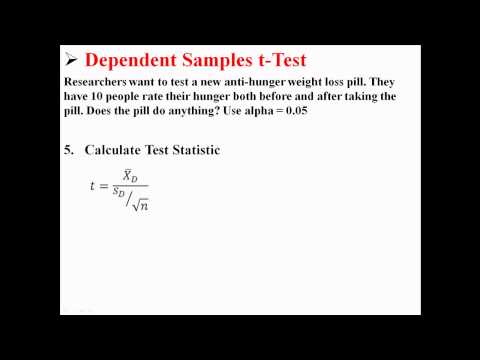
Hey you! So, let’s talk about something that might sound a bit nerdy but is actually super interesting: the paired sample t-test. Sounds like math class, huh? But stick with me.
Este blog ofrece contenido únicamente con fines informativos, educativos y de reflexión. La información publicada no constituye consejo médico, psicológico ni psiquiátrico, y no sustituye la evaluación, el diagnóstico, el tratamiento ni la orientación individual de un profesional debidamente acreditado. Si crees que puedes estar atravesando un problema psicológico o de salud, consulta cuanto antes con un profesional certificado antes de tomar cualquier decisión importante sobre tu bienestar. No te automediques ni inicies, suspendas o modifiques medicamentos, terapias o tratamientos por tu cuenta. Aunque intentamos que la información sea útil y precisa, no garantizamos que esté completa, actualizada o que sea adecuada. El uso de este contenido es bajo tu propia responsabilidad y su lectura no crea una relación profesional, clínica ni terapéutica con el autor o con este sitio web.
Imagine you’re testing a new workout routine. You want to see if it really makes a difference in your fitness level. You measure your strength before and after the eight-week program. That’s where this test comes in handy!
It’s all about comparing two related groups – like your pre-workout and post-workout stats. Simple, right?
You’re basically asking, “Did this new routine actually help me out?” It’s a cool way to dig into research and see if those squats were worth it! So let’s break down how this works in real-life studies.
When to Use a Paired Sample T-Test in Psychological Research: Key Guidelines and Considerations
When you step into the world of psychological research, you often deal with data that needs some serious analyzing. One of the tools in your toolbox is the paired sample t-test. It’s pretty handy for comparing two related groups to see if there’s a significant difference between them. But when exactly should you pull this tool out? Let’s break it down together.
First off, a **paired sample t-test** is used when you have two sets of related data. Think about it like this: imagine you’re testing a new game strategy and want to know if it improves your scores. You could collect scores before and after trying the strategy, right? That’s a prime candidate for a paired sample t-test!
Here are some key points to keep in mind:
- Related Samples: Use this test when your samples are linked. You might compare the same participants’ responses before and after an intervention.
- Normality Assumption: Your differences between pairs should be normally distributed. If you’re unsure about this, visualizations like histograms can help.
- Interval or Ratio Data: The data should be measured on an interval or ratio scale—think temperature or test scores rather than categorical outcomes like «yes» or «no.»
- Equal Variances: While not as strict as some tests, check that the variances are not too different; extreme differences can skew your results.
- Sample Size: A minimum of 30 pairs is often recommended for more reliable results, but smaller groups can still be analyzed depending on your context.
Now, let’s get into a real-world example to make all this clearer. Suppose you’re studying stress levels among students throughout a semester. You measure their cortisol (stress hormone) levels at the start of the semester and again right before finals. If you find that cortisol levels drop significantly during that time, you’d use a paired sample t-test to analyze those two sets of data—before and after finals.
But wait! What if your data isn’t normally distributed? Well, there are alternatives out there like non-parametric tests (e.g., Wilcoxon signed-rank test) that work better in such cases.
Remember though—this blog isn’t here to replace professional help or guidance from experts in statistics or psychology. Use these tools wisely and always consult with someone more experienced if you’re unsure about your analysis.
In summary: Knowing when to use a paired sample t-test can significantly bolster your research findings. Just stick to those key guidelines, trust your instincts, and don’t hesitate to reach out for help when needed!
Identifying Ideal Scenarios for Using Paired T-Tests in Psychological Research
You know, when researchers want to compare two related groups, they often turn to something called a paired t-test. It’s pretty useful in psychology because it helps us figure out if there are significant differences in the same group before and after a treatment, or in two related conditions. So, let’s chat about when you’d want to use this nifty tool.
First off, the paired t-test is perfect when you have two sets of related observations. For instance, imagine you’re testing a new form of therapy. You measure anxiety levels in participants before and after they participate in the therapy sessions. This gives us those two related measurements per person—before and after. So if you’re working with human subjects where each one acts as their own control group, it’s just ideal.
Also, think about situations where the measurements are taken under different conditions. Let’s say you’re studying how sleep affects reaction time. You could test participants’ reaction times after one night of good sleep versus one night of poor sleep. Each participant’s scores are paired because they’re based on the same individual.
Another scenario? You may want to use it while analyzing longitudinal data. This means you’re looking at how something changes over time within the same individuals. So imagine measuring stress levels every month for six months after an intervention; you’d have pairs of scores that make for a great application of the paired t-test.
And hey, don’t forget about situations involving matched subjects. In these cases, researchers pair participants based on specific characteristics—like age or gender—to ensure comparability. If you test one matched pair with a new coping strategy while giving the other pair no treatment at all, each participant’s outcome within that pair can be analyzed together using this test.
Now let’s bring this back to some real-world connections! Picture playing a game like «Among Us,» right? If you wanted to see if people communicate better when they play together versus playing alone, you could measure their communication skills before and after either scenario with the same group. The similar nature of both scenarios would give clear paired data.
In summary:
- Two sets of related observations: Pre- and post-intervention measures.
- Different conditions: Measurements under varying stimuli (like good vs poor sleep).
- Longitudinal data: Changes within individuals over time (monthly stress levels).
- Matched subjects: Paired based on certain characteristics (age or gender).
So yeah! There’s your lowdown on when and why you’d use a paired t-test in psychological research—it just makes sense for comparing things that are connected or where context matters deeply. And remember: although stats can be super powerful tools for understanding behaviors and trends, they should always complement clinical judgments—not replace them!
Step-by-Step Guide to Reporting a Paired Sample T-Test in Psychological Research
Reporting a paired sample t-test in psychological research doesn’t have to be daunting. Let’s break it down step-by-step, keeping it simple and straightforward.
What is a Paired Sample T-Test?
A paired sample t-test is used when you want to compare two related groups. Think of it like playing a game where you measure performance before and after some training or an intervention. You’re interested in seeing if there’s a significant difference between these two sets of scores.
Step 1: Define Your Hypothesis
Start with your hypothesis. What are you testing? Is there a difference in anxiety levels before and after therapy? Make sure to clearly state your null hypothesis (no difference) and your alternative hypothesis (there’s a difference).
Step 2: Collect Your Data
Gather your data from the same participants under both conditions. For instance, if you’re studying the effects of mindfulness on stress, measure stress levels before and after the mindfulness session for each participant.
Step 3: Check Assumptions
Make sure your data meets the necessary assumptions for conducting a paired sample t-test:
- The differences between pairs should be normally distributed.
- The observations should be independent.
- The scale of measurement should be continuous.
If you’re unsure about normality, you can use tests like the Shapiro-Wilk test. But don’t worry too much about being perfect; just aim for reasonable assumptions!
Step 4: Conduct the T-Test
Use statistical software like SPSS or R to run your test. You’ll input your pre-test and post-test scores and let the program do its magic! It will calculate the t-value and p-value.
Here’s how you can interpret what those mean:
– **T-value:** A higher absolute value typically indicates a stronger effect.
– **P-value:** If this is less than .05, it usually suggests that there’s enough evidence to reject the null hypothesis.
Step 5: Reporting Your Results
Now comes the fun part! When writing up your results, include:
- The means and standard deviations for both groups.
- The t-value and degrees of freedom.
- The p-value along with confidence intervals if possible.
For example, you might write something like this: “A paired sample t-test was conducted to compare stress levels before (M = 7.0, SD = 1.2) and after (M = 5.0, SD = 1.0) mindfulness training in participants. There was a statistically significant decrease in stress levels after training, t(29) = 5.67, p Step 6: Discuss Your Findings
Finally, reflect on what these results mean in relation to existing literature or theories in psychology. For example, you might say that these findings support previous research that shows mindfulness can effectively reduce stress levels.
Remember, while reporting is key in psychological research, maintaining ethics around participant confidentiality is essential too!
Well there you go! Reporting on a paired sample t-test isn’t as scary as it may seem at first glance—it’s all about understanding what your data is telling you! You know what they say; “data speaks!” Just make sure it’s clear enough for others to hear it too!
Okay, so let’s chat about the paired sample t-test. It might sound a bit like a fancy term from a statistics class, but it’s actually a pretty cool tool researchers use to compare two related groups. Picture this: you want to see if a new teaching method helps students improve their test scores. You measure their scores before and after using the new method. This is where the paired sample t-test struts in.
You know what I mean? It helps you figure out if any change in scores is significant or just due to chance. So, let’s say you had a group of ten students who took a math test one month before and then again after your new teaching approach. You’d have two sets of scores for each student, right? The paired t-test takes those two sets and tells you if the difference between them is big enough to matter.
And honestly, I remember when we did something like this in school. There was this project where we had to test different study methods on our friends’ grades. We split them into two groups and tracked their progress over time – really eye-opening! When we crunched the numbers using that t-test, it felt like magic seeing whether our work paid off or not.
The real beauty of the paired sample t-test is how it accounts for variability within subjects. Since you’re looking at the same group—like those same ten students—it eliminates other factors that could mess with the results. It’s like having a built-in control setup without all the extra effort.
So, in research applications, this test comes in handy when you’re dealing with repeated measures or when you want to catch effects over time or conditions without muddying your findings with all sorts of variables floating around.
Overall, it’s an incredibly valuable method for anyone looking to understand deeper trends and relationships in their data while keeping things together as cohesively as possible! And honestly? It can make all the difference in deciding what works and what doesn’t—kind of exciting if you ask me!