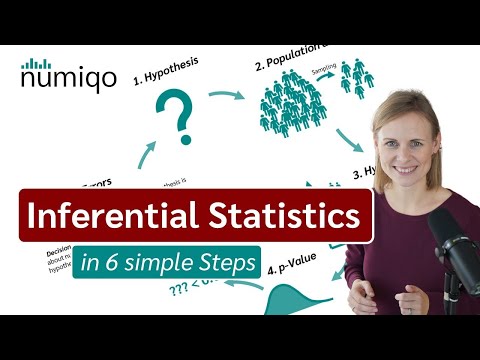
Hey, you! So, let’s have a chat about something that might sound a bit nerdy but is seriously interesting—inferential analysis in research. I mean, it may not be the hottest topic at a party, but it’s super important!
Este blog ofrece contenido únicamente con fines informativos, educativos y de reflexión. La información publicada no constituye consejo médico, psicológico ni psiquiátrico, y no sustituye la evaluación, el diagnóstico, el tratamiento ni la orientación individual de un profesional debidamente acreditado. Si crees que puedes estar atravesando un problema psicológico o de salud, consulta cuanto antes con un profesional certificado antes de tomar cualquier decisión importante sobre tu bienestar. No te automediques ni inicies, suspendas o modifiques medicamentos, terapias o tratamientos por tu cuenta. Aunque intentamos que la información sea útil y precisa, no garantizamos que esté completa, actualizada o que sea adecuada. El uso de este contenido es bajo tu propia responsabilidad y su lectura no crea una relación profesional, clínica ni terapéutica con el autor o con este sitio web.
You know how sometimes we want to make guesses about big groups of people based on just a small sample? That’s where inferential analysis comes in. It’s all about taking what we see in those little pieces and figuring out what they could mean for everyone else.
Imagine this: You’re at a gathering with pizza (because who doesn’t love pizza?), and you taste one slice. Based on that one slice, you start thinking, “Wow, this place has bomb pizza!” But is it really true for every pizza here? That’s kind of the vibe with inferential analysis.
So buckle up! We’re going to break down some of these essential concepts together. And trust me, by the end, you’ll feel a whole lot smarter about how research can tell us more than just what’s on the surface.
Understanding the 5 Key Elements of Inferential Statistics for Data Analysis
Inferential statistics can feel like a maze sometimes, but once you grasp the basic elements, it starts to make sense. You know what I mean? It’s all about making inferences about a larger population based on a smaller sample. So, let’s break down the five key elements of inferential statistics.
1. Population and Sample
At the heart of inferential statistics is the distinction between a population and a sample. A **population** includes every single member of a defined group, like all players in an online game. But, often it’s impossible to study everyone. Instead, researchers collect data from a **sample**, which is just a subset of that population. Think of it like scouting just one team before the championship instead of watching every game.
2. Hypothesis Testing
Next up is hypothesis testing. This is where you propose something and then set out to test it. For example, imagine you think that players using a certain strategy score more points than players who don’t. You’d start with two hypotheses: your **null hypothesis** (e.g., there’s no difference in scores) and your **alternative hypothesis** (e.g., there’s indeed a difference). You test them to see which holds true.
3. Confidence Intervals
Let’s talk about confidence intervals next! If you took multiple samples from your population, you’d get different results each time, right? A confidence interval gives you a range where you can expect the true population parameter to lie with some certainty—usually 95%. So if your interval for average scores is between 150 and 170 points, you’re saying you’re pretty confident that the true average score lies within that range.
4. P-Values
These are one of those terms that might sound intimidating at first but hang on! A **p-value** helps you determine whether to reject or accept your null hypothesis based on your data’s results. The lower the p-value (commonly below 0.05), the stronger the evidence against your null hypothesis; it suggests something unusual about your sample if we assume our null hypothesis was true.
5. Effect Size
Lastly, we have effect size! This tells you how strongly two groups differ from each other or how significant an observed effect is in practical terms—basically showing not just whether something happened but how much it matters! So if those players using strategy X scored way higher than those using strategy Y with an effect size of 0.8 (which shows a large difference), you’d know this strategy really works!
So there you have it—five essential elements of inferential statistics laid out simply! You might not go diving into big research projects anytime soon after reading this—but when someone throws around terms like “confidence intervals” or “p-values,” at least now you’ll have an idea what they’re talking about! Just remember: understanding data through these concepts doesn’t substitute real-world experience or professional advice; it’s just fun groundwork for sticking up for yourself when someone tries to bamboozle ya with numbers!
Key Concepts of Statistical Inference: Understanding Their Role in Data Analysis and Decision-Making
Sure! Let’s talk about statistical inference and why it’s a big deal in data analysis and decision-making.
Statistical inference is all about making guesses or conclusions about a whole group (population) based on just a part of it (sample). Think of it like trying to guess how many jellybeans are in a giant jar by just counting those you can grab with one hand. You can’t grab them all; you just take a handful and hope that your guess isn’t too far off.
Now, one key concept here is the sample size. The bigger your sample, the better your guess might be. It’s like playing darts—if you throw one dart, sure, it could hit the bullseye, but if you throw a hundred darts, your average score will be much closer to the actual center. That’s because larger samples tend to reflect the population more accurately.
Another important idea is confidence intervals. These are like safety nets for our guesses. When we calculate a confidence interval, we’re saying: “We’re pretty sure that the true value lies somewhere between X and Y.” Imagine you’re betting on who will win in a video game tournament. If you say Player A has an 80% chance of winning based on some matches they played—well, there’s still room for surprises. Confidence intervals help us understand that uncertainty.
Then we have hypothesis testing, which sounds fancy but is really quite simple. You start with a null hypothesis—it’s like saying “there’s no difference here.” If data from your sample shows significant differences or effects (like if Player B beats Player A unexpectedly), then you might reject that null hypothesis. You’re basically saying, “Hey! There might be something interesting going on!”
Also worth mentioning is p-values. They help us decide whether to reject the null hypothesis or not. Think of p-values as little scores telling us how surprising our results are if the null hypothesis were true. A low p-value (typically lower than 0.05) suggests that what we observed would be super rare if nothing was happening at all—and that makes us think differently!
In practice, let’s say you’re analyzing data from a new mobile game aimed at improving player retention rates based on various features. By using statistical inference methods, you can figure out if adding feature X genuinely keeps players around longer or if it’s just happens chance with players sticking around anyway.
Lastly but definitely not least—let’s touch on bias. You really have to watch out for biases in your sampling methods; they can lead you astray faster than unexpected lag in an online game! If you’re only surveying players in one specific region while ignoring others, your findings won’t represent everyone fairly.
All these concepts work together like pieces of a puzzle to provide clearer pictures of what’s really happening underneath the surface of our data analysis efforts! Just remember though: While statistical inference gives us powerful tools for understanding trends and making decisions, it’s always good practice to consult professionals when interpreting complex findings or when big decisions are involved!
So yeah, understanding these essential concepts helps guide our decisions based on data—making forecasts more reliable while keeping uncertainties right in check!
Five Key Concepts of Inferential Analysis in Research: Understanding Their Psychological Implications
Inferential analysis is a big deal in research, especially when we want to understand patterns and make predictions based on our data. If you’re curious about how this all ties into psychology, you’re not alone! Let’s break down **five key concepts** of inferential analysis and their implications in the world of psychology. You with me?
- Population vs. Sample: So, when researchers want to study something, they can’t always ask everyone, right? That’s where samples come in. A sample is just a smaller group taken from a larger one—called the population. Imagine you want to know how much teens like video games; instead of asking every teen in the world (that’s exhausting!), you might survey just a few hundred.
- Hypothesis Testing: This is like making a guess about what will happen based on your data. You start with a null hypothesis—basically saying there’s no effect or difference—and then test it out. For example, if you think that playing video games boosts mood, your null hypothesis would be that it does *not* affect mood at all. Once the data’s in, you see if your guess was right!
- Confidence Intervals: It sounds fancy, but it’s really about estimating where the true mean of a population lies based on your sample data. Let’s say from your survey about video game enjoyment, you find that teens average an enjoyment score of 8 out of 10 with a confidence interval of 7 to 9. That means there’s a good chance the true average for all teens is somewhere in that range.
- P-Values: Now here comes another important piece: p-values help us determine whether our results are statistically significant or not. Basically, it answers the question: “How likely am I to get these results by random chance?” If your p-value is low (usually below .05), it suggests strong evidence against the null hypothesis. So if your gaming study shows a p-value of .01? Well, that’s pretty solid evidence to say gaming does affect mood!
- Error Types (Type I and Type II): Okay, these can be tricky! A Type I error happens when you think there *is* an effect (like gaming improves mood) when really there isn’t—basically a false positive. A Type II error is when you miss finding an effect that is actually there—a false negative. Both types can mess things up in research because they lead to wrong conclusions!
Catching these concepts can feel like leveling up in a game! Each part plays its role in helping researchers draw solid conclusions from their studies—especially in psychology where understanding human behavior is super complex.
If you’re diving into research or just curious about how we understand these things better at all levels of psychology, keep these key ideas close by! Remember though—you don’t need to substitute this info for real professional guidance if you’re looking at research and its implications seriously. It’s always wise to dig deeper with experts when needed.
So, let’s chat about inferential analysis! It’s one of those terms that might sound a bit intimidating, but really, it’s all about making educated guesses based on data. You know how sometimes you try to figure out what your friends are thinking based on their reactions? Kind of the same concept, just with numbers and research.
Now, picture this: you’re in a café with a friend who just got dumped. They’ve been crying over their coffee, and you’re left wondering if love is really dead or if it’s just their bad luck. This is where inferential analysis kicks in! Researchers often gather data from a small group – think of it as your friend – and then use that info to make broader conclusions about everyone else’s love lives.
Essentially, there are two main ideas at play: **sampling** and **hypothesis testing**. Sampling is like choosing a few people from a big crowd to see what they think about pineapple on pizza (seriously though, who does). It saves time and effort while giving you an idea of the larger group’s opinion.
Then there’s hypothesis testing. Imagine you think most people prefer chocolate ice cream over vanilla. You’d set up an experiment (like a taste test) to see if your guess holds water – that’s hypothesis testing in action! You gather your data, analyze it, and bam! You either confirm your theory or realize that vanilla has a secret fan club.
But here’s where things get tricky; because researchers have to factor in uncertainty. Not every study will give you 100% accurate results (just like how not every friend will always tell the truth about their feelings). That’s why there are concepts like p-values and confidence intervals that help researchers say stuff like «Well, there’s an 80% chance we’re right!» It’s basically acknowledging that there might be some wiggle room.
Honestly though? I remember when I first learned this stuff in school; it was kind of overwhelming at first! But after finally wrapping my head around it—like the sheer joy of connecting those dots—it all started making sense. Imagine piecing together that mystery novel you’ve been trying to finish!
In short, inferential analysis isn’t just dry math plopped onto research papers; it’s filled with stories waiting to be told through data. Who knows? Maybe next time you’re faced with an unknown situation or trying to understand someone better, you’ll naturally start inferring what might be going on beneath the surface! So whether you’re digging into research or just chatting with friends over coffee—remember there’s always more than meets the eye!


