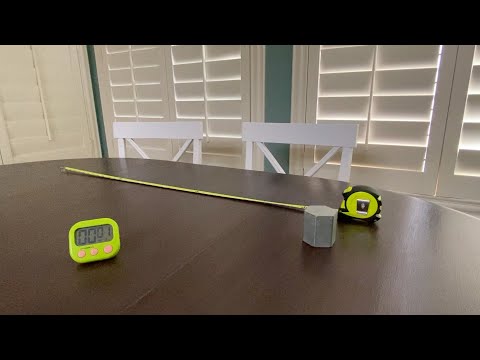
Hey you! So, let’s chat about something that sounds kinda cool but might seem a bit boring at first—force and Newtons. I mean, force is everywhere, right? It’s what’s behind every push and pull you feel every day.
Este blog ofrece contenido únicamente con fines informativos, educativos y de reflexión. La información publicada no constituye consejo médico, psicológico ni psiquiátrico, y no sustituye la evaluación, el diagnóstico, el tratamiento ni la orientación individual de un profesional debidamente acreditado. Si crees que puedes estar atravesando un problema psicológico o de salud, consulta cuanto antes con un profesional certificado antes de tomar cualquier decisión importante sobre tu bienestar. No te automediques ni inicies, suspendas o modifiques medicamentos, terapias o tratamientos por tu cuenta. Aunque intentamos que la información sea útil y precisa, no garantizamos que esté completa, actualizada o que sea adecuada. El uso de este contenido es bajo tu propia responsabilidad y su lectura no crea una relación profesional, clínica ni terapéutica con el autor o con este sitio web.
When I think of Newtons, I can’t help but remember those science classes with all the crazy experiments! You know, like launching rockets with vinegar and baking soda? Total blast.
But here’s the deal: understanding Newtons isn’t just for nerds in lab coats. It’s about how we navigate our world. Whether you’re playing sports or just walking your dog, force is, like, super relevant!
So stick around; we’re going to break this down together and make it fun! Because honestly, who wouldn’t want to understand how the universe plays tug-of-war with us?
Understanding the Newton: The SI Unit of Force and Its Meaning in Science
When we talk about force in science, we often mention the Newton. So, what exactly is it? A Newton (N) is the SI unit of force, named after Sir Isaac Newton, who formulated the laws of motion. Basically, it measures how hard something pushes or pulls.
To put it simply, if you’ve ever kicked a soccer ball, you’ve exerted force. The harder you kick it, the greater the force involved. If that ball weighs about one kilogram and you want to give it a good shove, you’d need to exert around one Newton of force to accelerate it at one meter per second squared. Isn’t that cool?
- Definition: One Newton is defined as the amount of force required to accelerate a one-kilogram mass by one meter per second squared.
- Applications: We use Newtions in various fields—engineering, physics, even biomechanics.
- Everyday Examples: Pushing a shopping cart or lifting weights involves applying force measured in Newtons.
- A Real-life Scenario: Imagine playing basketball and trying to dunk; you have to apply enough force against gravity. That action requires several Newtons depending on your weight and speed!
But here’s where things get interesting: not all forces are created equal! There are different kinds of forces like gravitational, frictional, and tension forces. For instance:
– Gravity: Pulls everything towards Earth’s center.
– Friction: Tries to stop objects from sliding past each other.
– Tension: Is what happens when you pull on an object with a rope.
For every action you take—say pulling that rope—there’s an equal and opposite reaction according to Newton’s third law. Pretty neat when you think about how this affects everything from playground swings to cars speeding down highways!
And hey, did you know that our bodies are constantly dealing with these forces? Think about it: when you’re sprinting or jumping—you’re using energy to counteract gravity while applying force through your legs. When we measure how hard we push off the ground or pull on things, we can express this effort in Newtons.
In science class or during experiments at home—like launching a homemade rocket or throwing a ball—you’re probably unwittingly playing around with these concepts! By understanding how much force you’re applying in various activities using Newtions gives insight into not just physics but everyday life as well.
So yeah, when someone mentions “Newtons,” they’re referencing more than just a unit of measurement—it’s all about understanding movement and interactions between objects in our world. This not only helps scientists but can be super useful for anyone curious about how things work.
Remember though—that while discussing forces can be fun and informative, this doesn’t replace any professional help for complex issues involving physics or physical health. Just keep exploring these cool ideas!
Understanding the SI Unit of Force: A Clear Guide to Newtons and Their Significance
I get it, you might be scratching your head thinking about the SI unit of force and what in the world a newton is. So let’s break it down together, easy-peasy.
First off, **force** is basically a push or pull on an object. We see it all around us—like when you kick a soccer ball or pull the door open. The unit we use to measure this force in the metric system is called a **newton (N)**. Named after Sir Isaac Newton, who was pretty much a genius back in the day.
So, what exactly does one newton mean? Well, it’s defined as the amount of force needed to accelerate a one-kilogram mass by one meter per second squared. In simpler terms, if you had a tiny little mass weighing one kilogram and you wanted to get it moving faster and faster at that rate, that’s one newton doing its thing.
Here are some key points to help clarify this whole newton business:
- 1 Newton = 1 kg·m/s²: This means one newton equals the force required to change an object’s motion basically.
- Examples from Daily Life: If you’ve ever played tug-of-war and felt how pulling with all your might affects your opponent’s movement—that’s you applying force!
- Gravity: The weight of an object also involves newtons; for instance, if you’re holding a 2 kg bag of apples, gravity pulls it down with about 19.6 N of force (because it’s roughly 9.8 N for each kilogram).
- Using Newtons in Physics: Newtons are super important in physics equations. They help us understand everything from why cars stop when you slam on the brakes to how rockets propel themselves into space!
But here’s something cool: just because we define force in newtons doesn’t mean that’s always how we think about it day-to-day. Imagine playing basketball; when you shoot for the hoop and miss—well, there was definitely some force acting on that ball! You might not calculate that in newtons during the game, but it’s still at play.
Now I have to mention this too: all those calculations might sound like they could give you a headache if you’re not into numbers or science! But understanding these ideas can really help you get what’s happening around you—from mechanics to motion!
So next time you’re playing catch or even just opening up that stubborn jar lid at home? Know that forces are working hard behind every little action. It may seem simple but think about those forces next time you’re doing something physical—it’ll open up a whole new way of seeing things!
And remember: while understanding forces can enhance your knowledge about physics and daily life experiences—it doesn’t replace professional help if you’re dealing with anything more serious or complex!
Understanding Force: A Clear and Simple Explanation
Alright, let’s break down force and its connection to Newtons in a way that makes sense, cool?
Force is basically a push or a pull on an object. It can change the object’s motion or shape. Imagine you’re playing tug-of-war with your friends. When you pull on the rope, you’re applying force. If everyone pulls hard enough, the other team gets dragged toward you. Pretty straightforward, right?
Now, when we talk about measuring force, we use the SI unit called the **Newton** (N). Named after Sir Isaac Newton, who had some pretty solid theories about motion and gravity, one Newton is defined as the amount of force needed to accelerate a one-kilogram mass by one meter per second squared. So if you have a 1 kg ball and you want it to speed up at 1 m/s², you’d need to apply exactly 1 Newton of force.
- Acceleration: This is how fast something speeds up or slows down. For example, if you’re in a car that goes from 0 to 60 mph really quickly—that’s acceleration!
- Mass: This refers to how much stuff is in an object. The more mass an object has (like a big elephant versus a small bird), the more force you’ll need to move it.
- Gravity: Ever thought about how hard it is to lift heavy things? That’s gravity at work! The Earth pulls everything toward its center with gravitational force.
Let’s say you’re playing basketball and trying to shoot from far away. When you jump and throw the ball towards the hoop, you’re using force generated by your legs and arms combined with gravity pulling it downwards! If you use enough force (and aim well), that ball might just swoosh right in!
And don’t forget friction—a type of force that opposes motion. Think about trying to slide on grass versus ice; ice is super slippery because there’s less friction.
In games like Mario Kart, your speed changes based on various forces acting on your kart—acceleration when hitting the gas pedal or deceleration when braking! It’s all about those Newtowns (sorry for being punny).
So remember:
- The more mass an object has, the more force you’ll need.
- Force can change how fast or slow something moves.
- Gravity and friction play huge roles in real life and games!
All this shows why understanding **force** is cool! It helps us figure out everything from throwing balls to driving go-karts or even launching rockets into space.
If some of this feels tricky or you’re curious for more details—chat with someone who knows their stuff deeper than I do!
Alright, let’s chat about something that’s a bit more on the scientific side but totally relevant to everyday life—force and how we measure it in Newtons. You know, back in high school, when physics class rolled around, I was that kid who sat at the back pretending to nod along but secretly wondering what all the fuss was about! But here’s the deal: understanding this stuff can really help you get a handle on how the world works.
So, first up, what’s a Newton? It sounds pretty fancy, right? Well, it’s actually named after Sir Isaac Newton, who was like this genius from way back when. Basically, one Newton is the amount of force required to accelerate a one-kilogram mass by one meter per second squared. Sound complicated? I promise it isn’t as wild as it seems! Imagine you’re pushing your shopping cart. If you shove it just enough so that it speeds up nicely without tipping over or going out of control, that’s applying force—Newton style!
Now here’s where things get interesting. We encounter forces all the time—gravity pulling us down when we slip on ice or friction slowing our bikes down. Understanding how Newtons work helps us grasp these forces better and figure out how to navigate through them. For example, have you ever tried to push a heavy door open? The harder you push (that’s force!), the more likely the door will budge—even if you’re just fueled by caffeine and sheer willpower!
I remember this time I helped my friend move furniture. We barely managed to lift a ridiculously heavy couch. Afterward, I jokingly said we could probably calculate how many Newtons of force we exerted together—not that we had time for physics in that moment! But thinking about it now makes me chuckle; that teamwork was definitely worth more than just 100 or so Newtons.
And while we might toss around numbers and calculations in textbooks or classrooms, what really matters is recognizing these forces in our daily lives. It gives you a deeper appreciation for what happens around you—like why those grocery bags feel so much heavier after an unintended detour through the chip aisle!
To wrap up this little ramble: understanding Newtons isn’t just for scientists; it’s about making sense of life’s little pushes and pulls too! Whether you’re contemplating how much effort it takes to heave yourself off the couch or figuring out why your bike won’t go uphill without some serious pedaling—it all connects back to those pesky little units of force! How cool is that?