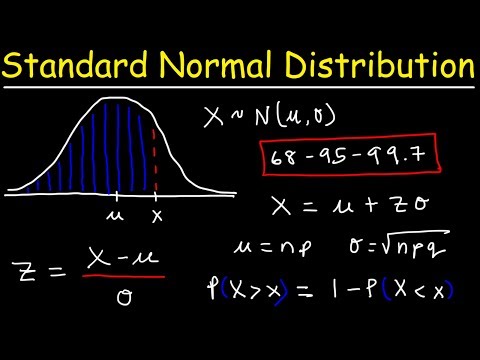
Hey, you! So, let’s chat about something that might sound a bit dull at first—normal distribution. Yeah, I know it’s not the wildest topic out there, but stick with me! The standard normal distribution table? It’s pretty cool once you get the hang of it.
Este blog ofrece contenido únicamente con fines informativos, educativos y de reflexión. La información publicada no constituye consejo médico, psicológico ni psiquiátrico, y no sustituye la evaluación, el diagnóstico, el tratamiento ni la orientación individual de un profesional debidamente acreditado. Si crees que puedes estar atravesando un problema psicológico o de salud, consulta cuanto antes con un profesional certificado antes de tomar cualquier decisión importante sobre tu bienestar. No te automediques ni inicies, suspendas o modifiques medicamentos, terapias o tratamientos por tu cuenta. Aunque intentamos que la información sea útil y precisa, no garantizamos que esté completa, actualizada o que sea adecuada. El uso de este contenido es bajo tu propia responsabilidad y su lectura no crea una relación profesional, clínica ni terapéutica con el autor o con este sitio web.
Picture this: You’ve got a bunch of test scores from your class. Some kids aced it while others, well, let’s say they didn’t quite shine. This is where our pal, the standard normal distribution table, comes into play.
It helps you figure out where those scores fall on the curve. Why should you care? Well, understanding this can totally change how you see data. Seriously! So grab a snack and let’s break it down together. You with me?
Mastering the Standard Normal Distribution Table: A Comprehensive Guide to Z-Scores and Their Applications
The standard normal distribution table can seem a bit intimidating at first, but really it’s your best friend when it comes to understanding probabilities. I mean, once you get the hang of it, you’ll be navigating that table like a pro!
So, let’s start with the basics. The standard normal distribution is a special case of the normal distribution where the mean is 0 and the standard deviation is 1. This means that it’s all about those z-scores! A z-score tells you how far away a value is from the mean in terms of standard deviations.
You know what’s cool? The z-score can help you determine how likely an event is to happen. It does this by converting any normal distribution to the standard normal distribution. This basically makes everything easier to compare.
### How do you find a z-score?
Finding a z-score is like measuring how tall you are compared to everyone else in your class. Here’s the formula:
Z = (X – μ) / σ
Where:
– X = your value
– μ = mean of the dataset
– σ = standard deviation
For instance, if you’re playing a video game and your average score is 500 with a standard deviation of 100, and you scored 650 last time, your z-score would be:
Z = (650 – 500) / 100 = 1.5
This means you performed better than average!
### What about using the Z-table?
Once you’ve got your z-score, it’s time to pull out that Z-table! This table shows you the probability that a statistic is less than or equal to your z-score.
– If your score was high (positive z), look up how much area is to its left in the table.
– If it was low (negative z), you’re looking for areas with lower scores.
Imagine you’re playing chess; winning strategies might involve anticipating an opponent’s moves based on their past performance—just like making predictions from our Z-table.
### Key Points About Z-Scores and Their Applications:
- Z-scores help compare different data points: Whether you’re looking at test scores or measurements from different sources.
- Tell probability: Using those tables can predict outcomes based on current information.
- Standardizing data: You’re turning different scales into one uniform scale for ease.
- A crucial part of statistics: From research studies to quality control in manufacturing!
Remember though, while understanding probabilities can be exciting and useful, it’s no replacement for professional guidance when dealing with complex problems or needs.
In sum, mastering that standard normal distribution table helps equip you with powerful tools for analyzing data. So grab those numbers and start crunching! Who knew stats could actually make sense?
Mastering the Standard Normal Distribution Table: A Calculator Guide for Accurate Data Analysis
Data analysis can seem a bit overwhelming, especially when you’re dealing with concepts like the standard normal distribution. But hang on! It’s not as scary as it sounds. Let’s break it down together.
The standard normal distribution is a way to show how data is spread out around a mean, or average. When we talk about “normal,” we’re referring to this familiar bell-shaped curve. It’s symmetrical, which means that equally half the data falls on either side of the average.
Now, what’s with the Standard Normal Distribution Table? This table helps you find probabilities and percentiles associated with different z-scores. A z-score tells you how far away a particular value is from the mean in terms of standard deviations. If you score really well on a game compared to your friends, your z-score might be high!
Let’s dive into how to use this table:
- Finding Your Z-Score: First things first, calculate your z-score using this formula: (X – μ) / σ. Here, X is your value, μ is the mean, and σ is the standard deviation. For example, if the average score in a game was 50 and you scored 70 with a standard deviation of 10, your z-score would be (70 – 50) / 10 = 2.
- Using The Table: Once you have that z-score, look it up in the standard normal distribution table. You’ll find probabilities listed that correspond to how much of the data lies below that score. For our previous example with a z-score of 2.0, you’ll see that about 97.72% of scores fall below yours!
- Calculating Probabilities: Suppose you’re curious about how likely it is for someone to score above yours (like if you’re bragging about being the best!). Just subtract your probability from 1: 1 – 0.9772 = 0.0228 or about 2.28%. That means only about two out of every hundred players would score higher than you.
Sometimes people make mistakes when they don’t double-check their calculations or misinterpret what their z-scores mean—so keep an eye out for that!
And hey! If numbers aren’t really your thing and you’re feeling lost? No worries! Use calculators available online; they can do these calculations for you in no time.
In summary, mastering the Standard Normal Distribution Table isn’t just useful for stats class—you can apply it casually too! Just remember to check your work and have fun with it.
This guide isn’t professional advice—if you find yourself struggling often with these concepts or feel overwhelmed by data analysis in general, chatting with someone who knows their stuff could be super helpful!
Mastering the Standard Normal Distribution Table: A Practical Guide for Accurate Data Interpretation
Sure, let’s tackle this straightforward. The standard normal distribution table, often called a Z-table, is basically like a cheat sheet for understanding how data is spread out. It helps you see where a particular score fits in relation to the rest of the data.
First off, the standard normal distribution itself is shaped like a bell curve. It centers around a mean of 0 and has a standard deviation of 1. This means most scores are pretty close to the average, with fewer scores appearing as you move away from it.
Why Use the Standard Normal Distribution Table?
The Z-table helps you find probabilities associated with a standard normal random variable—that’s just fancy talk for figuring out how likely something is to happen based on where it falls in your dataset.
Now, let’s look at some key points to keep in mind:
- Z-scores: These scores tell you how many standard deviations away from the mean a specific value is. For example, if you have a Z-score of +2, that means your score is two standard deviations above the mean.
- Probability: The Z-table gives you the probability that a score falls below a given Z-score. So if you’re trying to understand what percentage of scores lie below your score in question—bam!—the table shows that for you.
- Finding Values: You usually start by finding your Z-score and then look it up in the table. The intersection should give you probability values—easy peasy!
Let’s say you’re playing basketball. Imagine your average score per game is 20 points with a standard deviation of 5 points. If one game stands out and you scored 30 points, you’d want to know how impressive that was statistically:
1. Your Z-score would be ( (30 – 20) / 5 = 2 ).
2. Look up this Z-score in the table: It shows about 0.9772.
3. This tells us approximately **97%** of games had less than your amazing game!
The Table Layout
The table itself can look intimidating at first! But once you get it down:
– The leftmost column lists Z-scores (like -3 to +3).
– The top row shows decimals (like .00, .01).
– You find your Z-score along these coordinates!
A Common Mistake
One common mistake? Forgetting that the probabilities reflect values *below* that Z-score! If you’re looking for values *above*, you’ll need to subtract from one.
So remember: if you’ve got a high score and want to know how many scored better than you did? Just take (1 – (probability)).
In real life scenarios or gaming stats analysis, using this tool will definitely help put things into perspective so that all those numbers don’t just swirl around in your head without meaning!
When using this or any statistical tool, don’t forget it’s okay to chat with someone who knows their stuff if you’re feeling stuck or unsure about interpreting data correctly.
In short—it’s all about getting comfortable with these numbers so they become second nature! So whenever data comes knocking at your door—you’re ready!
Okay, so let’s chat about the standard normal distribution table—it sounds all fancy, right? But stick with me; it’s actually pretty interesting once you get into it!
Imagine you’re back in school, trying to figure out grades or test results. You probably remember that feeling of stress while waiting for your scores. Now, what if I told you that this table is like a secret decoder ring for understanding those scores? Seriously! It shows how data is spread out around the average. The whole thing revolves around a bell-shaped curve, which is where the “normal” part comes from.
When we talk about the standard normal distribution, we’re referring to a specific kind of curve where the average is always zero and the standard deviation is one. What does that mean? Well, let’s say your math test had an average score of 75. If you got an 85, that’s above average, right? We can use the table to see how many people scored below you based on where your score falls on that curve.
So why do we care about this? Picture yourself at a party—there are a bunch of people mingling around. Some are shy and hanging out in one corner (the low scorers), while others are out on the dance floor showing off their moves (the high scorers). The standard normal distribution helps us figure out what percentage of people fall into each area without having to ask everyone directly.
Now, I remember my buddy Sam struggling with stats. He’d stress himself out over numbers but light up when he finally understood how these tables worked. One night after class, he said it felt like suddenly finding a cheat code in a video game—everything just clicked! He realized he could visualize his grades compared to everyone else’s without drowning in anxiety.
But let’s be real—using the table can feel confusing at first glance. You’ve got those Z-scores flying around and percentages everywhere. A Z-score tells you how far away your value is from the average in terms of standard deviations—seriously not as scary as it sounds! Just think of it as pointing to where you fit into the big picture.
So if you’re ever handed one of those tables and it stares back at you like some sort of ancient scroll—no worries! Just take a breath and know it’s all about getting perspective on data and understanding how different pieces relate to each other in this vast sea of information we call life.
In short, diving into this world makes sense once you view it as just another tool in your toolbox for understanding everyday stuff—like test scores or even things like heights or ages within certain groups. So next time you’re faced with those numbers and curves, just remind yourself: You got this!


