You know when you’re chatting with a friend and they just don’t get what you’re saying? It’s super frustrating, right? Sometimes, it’s not that they aren’t listening. They might just need a little nudge to get it.
Este blog ofrece contenido únicamente con fines informativos, educativos y de reflexión. La información publicada no constituye consejo médico, psicológico ni psiquiátrico, y no sustituye la evaluación, el diagnóstico, el tratamiento ni la orientación individual de un profesional debidamente acreditado. Si crees que puedes estar atravesando un problema psicológico o de salud, consulta cuanto antes con un profesional certificado antes de tomar cualquier decisión importante sobre tu bienestar. No te automediques ni inicies, suspendas o modifiques medicamentos, terapias o tratamientos por tu cuenta. Aunque intentamos que la información sea útil y precisa, no garantizamos que esté completa, actualizada o que sea adecuada. El uso de este contenido es bajo tu propia responsabilidad y su lectura no crea una relación profesional, clínica ni terapéutica con el autor o con este sitio web.
Here’s the thing: reiterating can be a lifesaver in those moments. A little repetition works wonders to clear up confusion or drive a point home.
But why does it matter so much in communication? Let’s dig into that! It’s all about making sure our messages land right where we want them to, you feel me?
Understanding the Meaning of ‘Reiterate’: Does It Imply Clarification?
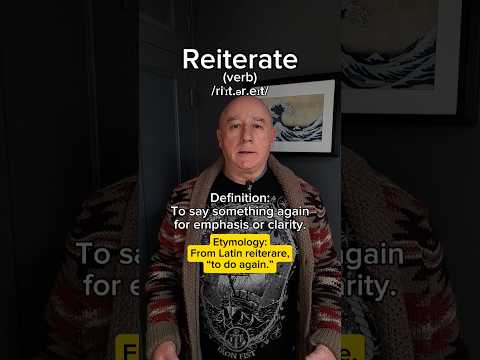
Reiterate is a term you might have heard in conversations or maybe in a meeting where someone wants to emphasize an important point. But what does it really mean? Well, when you reiterate something, you’re basically saying it again. You’re repeating information for clarity or emphasis, hoping to ensure that your audience truly understands the message.
Now, let’s break it down further! Reiterating can be super helpful in communication for several reasons:
- Emphasis: When you reiterate a point, it highlights its importance. Like when you’re playing a game and the instructor reminds you about the rules – they want to make sure everyone’s on the same page.
- Clarification: Sometimes people miss key details during the first go around. Reiterating can help clear things up when there’s confusion.
- Retention: Hearing something again makes it more likely you’ll remember it later. Just like repeating a catchy song; before long, you’re singing along!
Let’s say you’re chatting with a friend who didn’t quite catch your earlier comment about meeting at 7 PM. You might say, “Just to reiterate, we’re meeting at 7 tonight.” In this case, you’re clarifying and making sure they know what time to show up.
But here’s the catch: reiterating doesn’t always guarantee clarification. If someone doesn’t understand the original message or if there are misunderstandings lingering around, just saying it again might not do much good!
For example, think of playing Pictionary with friends where one person gives clues but nobody gets them right! If they just repeat their clues without changing how they explain them or giving additional context, well…everyone’s still stuck guessing what «blue giraffe» could possibly mean.
Sometimes it’s useful to not only reiterate but also rephrase or give examples to help make sense of things better.
So next time you find yourself needing to clarify something important—or even if you’re just having fun trying to get people on board—remember that while reiteration can be powerful, adding some context or changing your approach can really make a difference!
But hey, don’t forget: if you ever feel totally lost in communication whether personal or professional problems arise from misunderstandings—sometimes reaching out for help from a professional really is the best move.
So now that we’ve unpacked this little gem of a word and its role in communication—doesn’t that feel clearer?
Effective Alternatives to ‘Reiterate’ in Professional Communication
Communication is key in any professional setting, and we all want to express ourselves clearly. You know that feeling when you’re trying to get your point across, and you just keep using the same word over and over? Yeah, it can get a bit repetitive. One common word that pops up is “reiterate,” which basically means to say something again for clarity or emphasis. But let’s take a closer look at this, shall we?
Using “reiterate” can sometimes feel a bit formal or stiff. So, if you’re aiming for a friendlier vibe or simply want to mix things up, here are some effective alternatives:
- Repeat: This is straightforward and keeps it casual. You might say something like, «Let me repeat that point for clarity.»
- Restate: This word works great when you’re explaining something in different words. For example, «To restate my point, we’re focusing on teamwork.»
- Rephrase: Perfect for when you want to clarify without sounding too technical. You could say, «I’ll rephrase that to make it clearer.»
- Summarize: If you’re wrapping things up or bringing together ideas, this is super helpful. «To summarize our discussion today…»
- Clarify: Great if you’re addressing confusion. Like saying, «Let me clarify that statement.»
Now here’s an interesting spin: Think about playing a team game like football (or soccer). When one player calls out instructions or strategies again but in different ways—maybe using gestures or simpler terms—that helps everyone stay on the same page without sounding redundant.
But don’t forget! Always choose your words based on your audience. Sometimes “reiterate” might actually fit well in a more formal situation. And remember: mixing up your vocabulary not only keeps things engaging but also helps others understand better!
So next time you find yourself pulling out the ol’ “reiterate” card, consider these alternatives instead. You’ll sound fresh and clear without sacrificing professionalism! Just keep it natural and authentic; that’s where real communication shines through.
And hey—while this info can be super useful in improving your communication skills, it’s important to remember it doesn’t replace professional guidance when needed!
Alternative Phrases for ‘Reiterate’: Polite and Effective Ways to Restate Ideas
Reiterating is a fancy way of saying you’re going to say something again, often to make sure everyone gets it. We do this all the time in conversations, meetings, or even just texting buddies. But sometimes, saying “I want to reiterate” can feel a bit stuffy or formal. So, what are some cool and polite alternatives that keep the vibe friendly and effective?
Let’s dig into some options you can use next time you wanna restate ideas without sounding repetitive. Here are a few phrases that can add a nice touch to your communication:
- To put it another way: It’s like giving your thoughts a little makeover! For instance, after explaining something complex, you might say, “To put it another way, we need to focus on our main goals.”
- To clarify: This is perfect for when things need some extra clarity. Say something like, “To clarify, we’re not just aiming for short-term results.”
- In other words: This one feels super casual and friendly. For example: “In other words, let’s all work together to make this project shine!”
- Just to summarize: Great for wrapping things up nicely. You could use it like: “Just to summarize our points: communication is key.”
- As I mentioned earlier: This helps remind folks of what was said without sounding harsh. You might say: “As I mentioned earlier, teamwork really boosts our success.”
- If I may expand on that…: This phrase shows your willingness to provide more detail without being pushy. Try saying: “If I may expand on that point…” before diving deeper into an idea.
- If I could echo that…: Sounds pretty smooth! Use it like this: “If I could echo that sentiment…” It keeps the conversation flowing while reinforcing important points.
- To revisit what we discussed…: Perfect for bringing back previous topics or ideas after some discussion has taken place.
Each of these phrases adds variety and comfort while keeping the conversation light. It’s kind of like playing your favorite video game and trying out different weapons or strategies—sometimes switching things up leads to better results!
Have you ever been in a meeting where someone just kept hammering the same point over and over? Yeah… it can get exhausting! Using these alternatives helps prevent repetition fatigue and makes dialogues more engaging.
In the end, remember that while using different terms makes communication smoother, clarity is key. Don’t hesitate to adjust your style based on who you’re talking with; a relaxed friend chat doesn’t need the same formalities as a business meeting.
So next time you’re about to use «reiterate,» think of these fun alternatives instead! Communication’s all about making connections—and hey—using varied language makes those connections stronger too!
You know how sometimes in a conversation, you say something, and the other person just looks at you like they’re trying to decode a foreign language? Yeah, it can feel pretty frustrating. That’s where reiteration really steps in to save the day. It’s basically about repeating what’s been said, but with a twist—like making sure the other person truly gets it.
I remember chatting with a friend once about her big decision to move to another city. She laid out all her thoughts, and I could see she was nervous. I knew she needed some clarification on her feelings, so I repeated back what I heard. “It sounds like you’re excited but also scared?” She nodded vigorously! It was like that moment clicked for both of us. Just by reiterating her words, we both found clarity together.
So what’s the deal with reiteration in communication? Well, it serves a couple of key roles that really matter. First off, it helps make sure there’s no misunderstanding. You know those moments when someone says something and you think you got it, only for them to later say: “That’s not at all what I meant”? Yeah, awkward! When you pause and repeat back their words or thoughts in your own way, it shows you’re engaged and really listening.
Plus, it can deepen connections between people. When you take the time to echo someone’s sentiments or opinions back to them—whether it’s joy or frustration—it shows empathy. It conveys that their feelings matter! Like when your buddy rants about work stress and instead of just nodding along mindlessly, you say something like «It sounds exhausting.» Bam! It’s like turning up the volume on understanding.
Reiterating also gives folks a chance to clarify their own thoughts too! Sometimes while explaining something complicated—like why pineapple belongs on pizza (it does!)—the more we talk about it and hear our words echoed back, the clearer our own opinions become. It’s almost cathartic!
But let’s be real: there is an art to doing this without sounding robotic or repetitive yourself. You don’t want to just parrot someone; that would be super annoying! Try rephrasing things or adding your own spin so it feels natural rather than forced.
In short—and hey this is important—reiteration does so much heavy lifting in communication! Whether it’s building understanding or bonding over shared experiences, it plays a role we often overlook. Next time you’re chatting with someone who seems lost or unsure? Give reiteration a shot; you’ll probably find it makes everything flow way smoother!